
Anderson County Dissolution of Marriage Records
Anderson County dissolution of marriage records are kept at the District Clerk's office in Palestine, Texas. If you need to find a divorce case filed in Anderson County, you can contact the District Clerk in person, by mail, or search through available online tools. The office handles all civil and family court filings, including dissolution cases going back to the county's earliest records. Whether you need a certified copy of a final decree or just want to check case status, the District Clerk is the right place to start.
Anderson County Overview
Anderson County District Clerk
The District Clerk in Anderson County is the official custodian of all dissolution of marriage records. The office files new petitions, stores case documents, and provides copies of decrees and judgments. Staff can look up cases by party name or cause number. You can visit in person at the courthouse in Palestine or send a written mail request.
Anderson County is served by four district courts: the 3rd, 87th, 349th, and 369th Judicial Districts. Family law cases, including divorce, are handled across these courts. The courthouse has been the hub for civil records since the county was organized in 1846. Historical divorce records going back to 1908 have also been indexed and are available through various research resources.
| Office | Anderson County District Clerk |
|---|---|
| Address | 500 N Church Street, Room 18 Palestine, TX 75801 |
| Phone | (903) 723-7412 |
| Hours | Monday through Friday, 8:00 AM to 5:00 PM |
| Website | andersoncountycourts.org |
The Anderson County Courts website at andersoncountycourts.org has information about how to request marriage and divorce records. The site notes that online search is available by full name of either spouse, case number, filing year, and marriage or divorce date.
The Anderson County courts portal provides access to divorce case records online. You can search by full name, case number, license number, or filing year.
Regular processing time for online requests is one to three business days, while certified copies by mail typically take three to seven business days.
Searching Anderson County Divorce Records
You have a few ways to search for dissolution of marriage records in Anderson County. Online tools let you check basic case info fast. An in-person visit to the Palestine courthouse gives you direct access to full files and the ability to get certified copies right away.
To search online, visit the Anderson County Courts website or use the statewide re:SearchTX portal. The re:SearchTX system connects to district court case data from across Texas and may show Anderson County filings depending on local participation. You can search by party name or cause number. Results typically show party names, filing dates, case type, and docket entries.
For in-person searches, go to the courthouse at 500 N Church Street in Palestine. Bring a valid photo ID and as much information about the case as you can. Staff can search by name or cause number. You can also send a written request by mail with your name, the names of both parties, approximate year of filing, and a check or money order for the applicable fees.
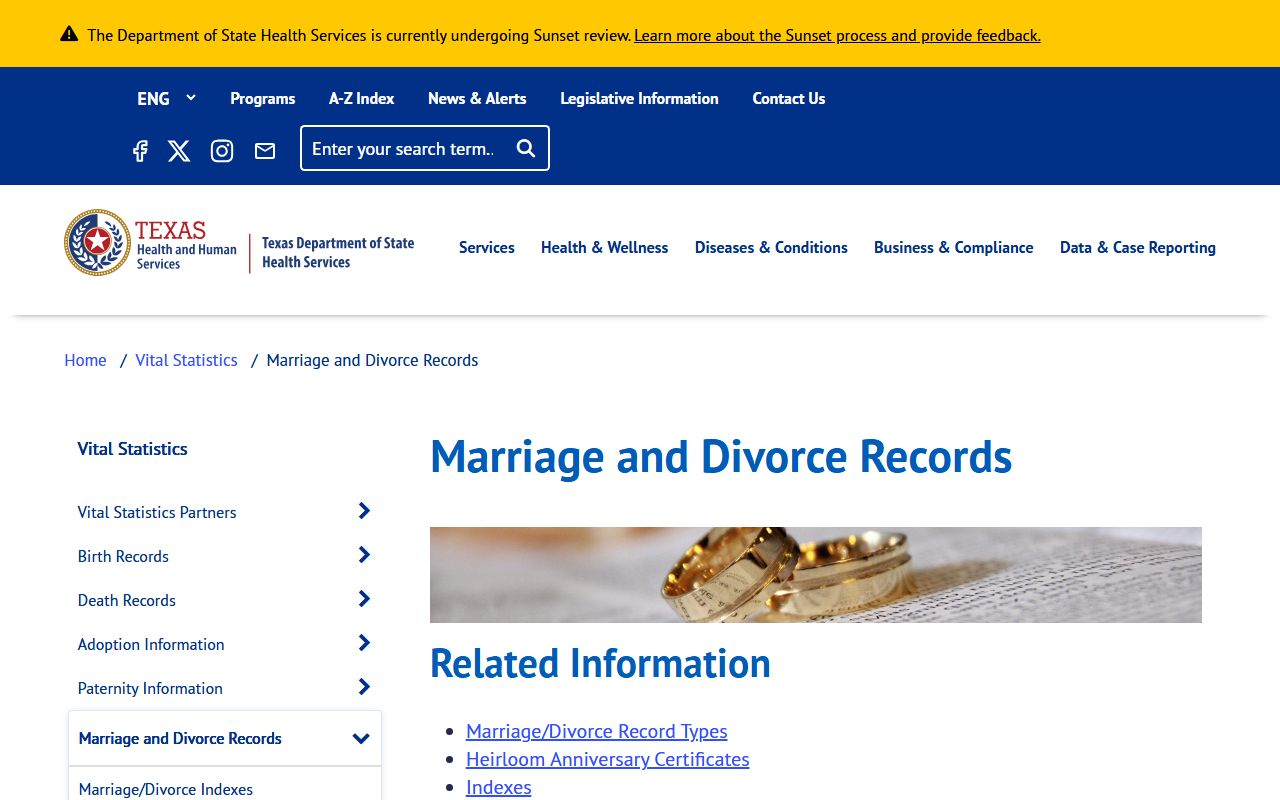
The Texas Department of State Health Services at dshs.texas.gov offers divorce verification letters for divorces that occurred from 1968 to the present. These are not certified copies, but they confirm that a divorce was granted and are processed through Texas.gov.
Texas DSHS maintains a statewide divorce verification service that is often faster than requesting from the county when you only need proof of a dissolution.
For certified copies with full decree details, you still need to contact the Anderson County District Clerk directly.
Filing for Dissolution in Anderson County
To file for dissolution of marriage in Anderson County, at least one spouse must have lived in Texas for six continuous months and in Anderson County for at least 90 days before filing. This residency rule comes from Texas Family Code § 6.301. If neither spouse meets the 90-day county requirement, you may need to file in a different county.
Texas allows no-fault divorce. Under Texas Family Code § 6.001, either spouse can file on grounds of insupportability, which simply means the marriage has broken down with no reasonable chance of getting back together. Fault grounds like cruelty, adultery, abandonment, and felony conviction are also available if the facts support them. Most Anderson County dissolution cases are filed on no-fault grounds.
The filing process starts with an Original Petition for Divorce. Once filed, the other spouse must be served with a citation unless they sign a Waiver of Service. A mandatory waiting period applies before any judge can sign a final decree. Under Texas Family Code § 6.702, no divorce can be granted until at least 60 days have passed from the date the petition was filed. This waiting period applies in all cases except those involving documented family violence.
When children are involved, the court must address conservatorship under Texas Family Code Chapter 153. This covers who has legal rights and duties over the children and what the possession schedule looks like. Property division follows community property rules under Texas Family Code Chapter 7. Spousal maintenance, if it applies, is governed by Texas Family Code Chapter 8.
E-filing is increasingly available through efile.txcourts.gov for attorneys and self-represented litigants. Court forms and self-help guides are also available at texascourthelp.gov.
What the Records Contain
Anderson County dissolution of marriage files contain several types of documents. The Original Petition for Divorce is the first document filed. It sets out the grounds and what the petitioner wants the court to decide. The file grows from there. If both parties agree, an agreed decree may be filed without a hearing. If the case is contested, there may be temporary orders, mediation records, and a final trial record in the file.
The Final Decree of Divorce is the key document most people need. It ends the marriage and sets out all the terms. This includes property and debt division, conservatorship arrangements, possession schedules for any children, child support amounts, and spousal maintenance if the court ordered it. The decree is signed by a district court judge and becomes a permanent court record. Certified copies of the decree are needed for name changes, remarriage, and various legal and financial transactions.
Other documents you may find in an Anderson County dissolution file include:
- Waiver of Service or return of citation
- Temporary orders for property, support, or custody
- Financial disclosures or inventory of assets
- Agreed final decree or judgment after trial
- Any protective orders related to the case
Most dissolution records are public. Anyone can request copies from the District Clerk. Some records may be sealed by court order, including records involving minor children in certain situations. Contact the clerk's office if you are not sure about the status of a specific file.
Note: Copy fees are generally $1 per page and $5 for certification, though you should confirm current rates with the Anderson County District Clerk before sending payment.
Fees and Costs
Filing fees for dissolution of marriage in Anderson County are set under Texas state law and include several line items for court facilities, law library surcharges, and other statutory fees. A typical divorce filing fee in Texas ranges from roughly $300 to $400 depending on the county and whether children are involved. Anderson County follows the general Texas fee schedule. Contact the District Clerk at (903) 723-7412 to confirm current filing costs before you go.
Copy fees are typically $1 per page for plain copies and $5 to certify a document. If you need service of process through the sheriff or constable, that runs an additional fee. Fee waivers are available for people who cannot afford court costs. You file a Statement of Inability to Afford Payment of Court Costs under Texas Rule of Civil Procedure 145. Forms for this are available at txcourts.gov and at the courthouse.
Legal Help and Resources
If you need help with a dissolution case in Anderson County, several resources are available. TexasLawHelp.org has free guides, forms, and step-by-step instructions for filing divorce without an attorney. The site covers uncontested cases, contested cases, and situations involving children. It is one of the best free resources for self-represented litigants in Texas.
Lone Star Legal Aid covers the East Texas region and provides free legal help to people who qualify based on income. Their main number is (800) 733-8394. You can also reach them at lonestarlegal.org. The State Bar of Texas has a lawyer referral service at (800) 252-9690, and you can search for local attorneys at texasbar.com.
For forms and procedural guides, check texascourthelp.gov, which is the official Texas judiciary self-help site. It has videos and written guides covering how to file for divorce, serve the other party, and present your case. The Texas State Law Library at sll.texas.gov also has research tools for Texas family law statutes.
Note: Clerks cannot give legal advice under Texas law. If you are not sure how to fill out a form or what to file, seek help from a legal aid organization or licensed attorney.
Cities in Anderson County
Anderson County includes Palestine (the county seat) and several smaller communities. All dissolution of marriage cases in Anderson County are filed at the District Clerk's office in Palestine.
Communities in Anderson County include Palestine, Frankston, Elkhart, Tennessee Colony, and Neches. None of these cities currently has a separate city-level records page for this site.
Nearby Counties
Anderson County borders several other East Texas counties. If you are not sure where a case was filed, check which county the parties lived in at the time of filing.