
Brown County Divorce Records
Brown County dissolution of marriage records are maintained by the District Clerk in Brownwood. You can search for divorce cases and get copies of decrees through the clerk's office at the Brown County Courthouse. The county seat is Brownwood, which serves as the hub for all district court proceedings in the area. Records date back to the county's founding and are available for public review.
Brown County Overview
Brown County District Clerk
The District Clerk in Brown County keeps all dissolution of marriage records on file at the courthouse in Brownwood. The office stores case files, processes certified copy requests, and maintains the official index of all divorce cases filed in the county. Brown County has two district courts, the 35th and 146th Judicial Districts, both of which hear family law matters including divorce.
Brownwood is the largest city in the county and the location of the courthouse. If you live in Brown County and need to file for divorce or get records from a past case, the District Clerk's office is your starting point. Staff there can look up cases by name or cause number and tell you what documents are available.
| Office | Brown County District Clerk |
|---|---|
| Address |
Brown County Courthouse Brownwood, TX 76801 |
| Website | browncountytx.org |
| Hours | Monday through Friday, 8:00 AM to 5:00 PM |
| District Courts | 35th and 146th Judicial Districts |
The Brown County official website lists current contact details for the District Clerk's office. You can find phone numbers, confirm office hours, and look up any special procedures the office uses for records requests.
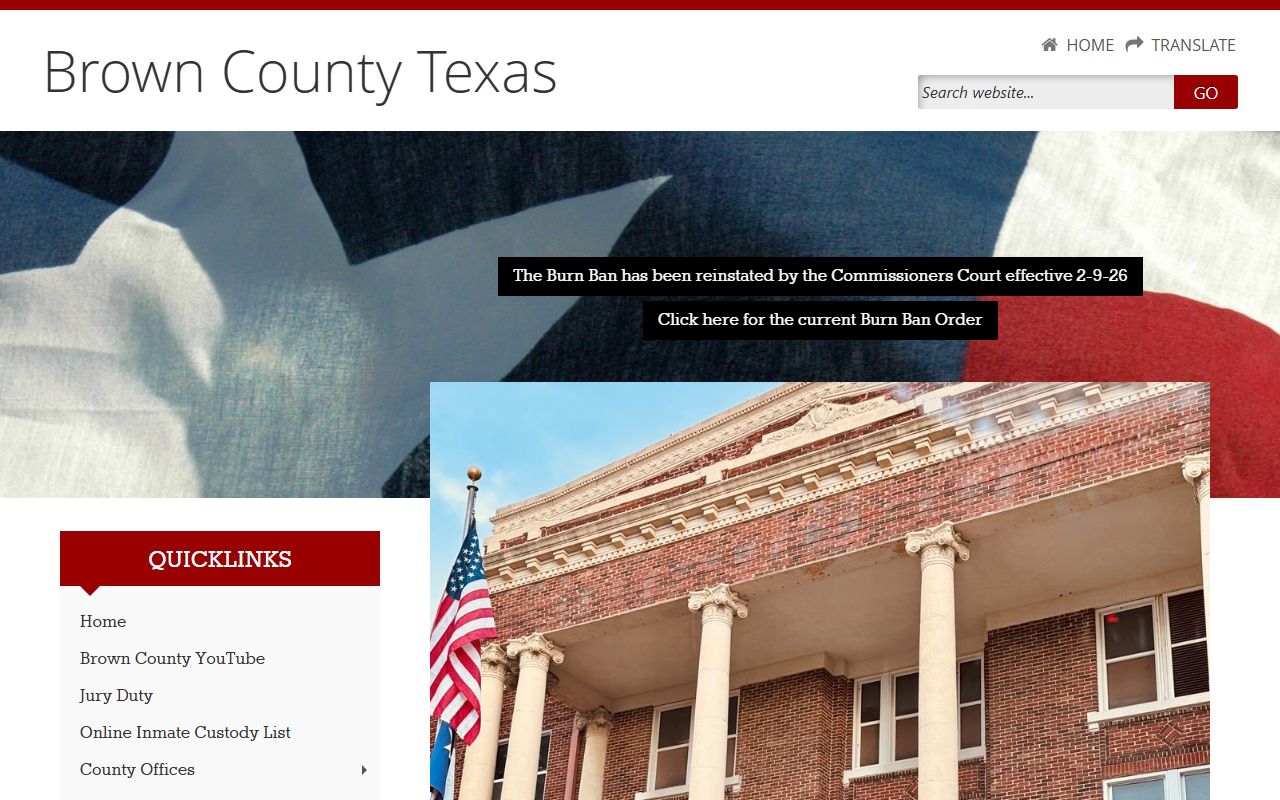
The Brown County official website is the primary source for current District Clerk contact information and office details.
Court records databases covering Brown County can help you locate case index information for dissolution of marriage cases.
Searching Brown County Divorce Records
You can search for dissolution of marriage records in Brown County in person or by mail. The District Clerk can look up cases using a party name or cause number. If you don't have the cause number, knowing both names and the approximate year the case was filed is usually enough to find it. In-person searches let you review the file and request copies right away.
The statewide re:SearchTX portal is worth checking for Brown County case information. This system gives access to court records across many Texas counties. Log in or create an account to search by party name. You may be able to find the cause number and case status online before contacting the clerk's office.
Mail requests work well if you cannot visit in person. Write a letter to the District Clerk with the names of both parties, the year of the divorce, the cause number if known, and a check or money order for the search and copy fees. Include a self-addressed stamped envelope for the response. Allow 5 to 10 business days for processing.
Filing for Divorce in Brown County
To file for dissolution of marriage in Brown County, you must first meet the residency requirements set by Texas Family Code § 6.301. One spouse must have lived in Texas for six months and in Brown County for at least 90 days. You file the Original Petition for Divorce at the District Clerk's office in Brownwood.
Texas allows both fault and no-fault divorce. Most filings use the no-fault ground of "insupportability" under Texas Family Code § 6.001. This means the marriage has become unworkable due to conflict, with no realistic chance of reconciliation. You don't need to prove that one party did something wrong to use this ground. Fault grounds are also available if they apply to your situation.
A mandatory 60-day waiting period applies after filing, per Texas Family Code § 6.702. The case cannot become final before that time. Once all issues are resolved and the judge signs the Final Decree of Divorce, the decree is filed with the District Clerk and becomes the official record of the dissolution. Property division follows community property rules under Texas Family Code Chapter 7.
Divorce Fees in Brown County
Filing a divorce petition in Brown County costs around $300 for cases without children. With children, the fee is usually higher to cover additional statutory charges. The exact fee depends on the services included. Contact the District Clerk to get the current fee schedule before filing.
Copies of divorce records cost $1.00 per page. Certified copies require an additional $5.00 certification fee per document. A search fee of $5.00 applies if the clerk must search by name rather than cause number. Most offices accept cash, check, or money order. Call to confirm whether credit cards are accepted.
If you cannot afford to pay filing costs, you may file a Statement of Inability to Afford Payment of Court Costs. This is available under Texas Rule of Civil Procedure 145. The court reviews your financial situation and decides whether to waive or reduce the fees. Forms are available online at txcourts.gov/forms or at the courthouse.
What Brown County Dissolution Records Include
A Brown County dissolution of marriage case file contains all documents filed from the petition through the final decree. The Original Petition starts the record. It names both parties, states the grounds for divorce, and lists what the filing spouse is asking for. The final document is the signed Final Decree of Divorce, which officially ends the marriage and sets out all the court's decisions.
Between those two documents, the file may include: service documents showing the other spouse was notified, any temporary orders issued during the case, financial affidavits, agreements between the parties, and any orders about children if applicable. Property division terms under Texas Family Code Chapter 7 are spelled out in the decree. Child conservatorship, possession schedules, and support amounts follow guidelines under Texas Family Code Chapter 153.
Most divorce records in Brown County are public. Anyone can request copies. Sensitive personal information like Social Security numbers and bank account details may be redacted. A certified copy of the decree is the document you need for official purposes like changing your name or updating a will.
Legal Help in Brown County
If you need legal assistance with a divorce in Brown County, several resources are available. The State Bar of Texas lawyer referral service at (800) 252-9690 can connect you with a family law attorney in the area. Many attorneys offer a reduced-fee first consultation.
Texas Law Help provides free online guides, court forms, and step-by-step instructions for people who want to file their own divorce. The site covers everything from the initial petition to the final decree. If you need one-on-one help and qualify based on income, Lone Star Legal Aid at (800) 733-8394 may be able to assist. Their services cover family law cases in many parts of Texas.
The Texas Court Help site has video tutorials and plain-language guides for self-represented litigants. It is available in English and Spanish. Official forms approved by the Texas Supreme Court are at txcourts.gov/forms.
Nearby Counties
Brown County borders several other counties. If you live near the county line, make sure you file in the county where you have met the 90-day residency requirement.