
Loving County Dissolution of Marriage Records
Loving County dissolution of marriage records are kept by the District Clerk in Mentone. This is the least populated county in the United States, and its court handles a small number of cases each year. If you need to search for a divorce filing or get a copy of a final decree, the District Clerk's office is your starting point. Cases filed here are part of the public record and can be accessed by request. You can reach the clerk by phone or visit the courthouse directly.
Loving County Overview
Loving County District Clerk
The District Clerk in Mentone handles all dissolution of marriage cases filed in Loving County. The office is small, but it maintains case files and provides copies of court documents to those who request them. Staff can look up records by name or case number and let you know what is in the file.
Loving County is the least populated county in the entire country. It sits in far West Texas near the New Mexico state line. Most residents who file for dissolution of marriage here are ranchers and workers tied to the oil and gas sector. The county has one district court that covers all civil and family law matters, including divorce cases. Records here go back to 1931.
The official county website at co.loving.tx.us has basic contact details for county offices. For court records, you contact the District Clerk directly.
| Office | Loving County District Clerk |
|---|---|
| Address | 100 Bell St. Mentone, TX 79754 |
| Mailing Address | P.O. Box 357, Mentone, TX 79754 |
| Phone | (432) 364-2210 |
| Fax | (432) 364-2211 |
| Hours | Monday through Friday, 8:00 AM to 4:00 PM |
The county seat, Mentone, is a very small community. If you plan to visit in person, call ahead first to confirm office hours and make sure the clerk can assist you when you arrive.
The Loving County official website provides contact information for all county offices, including the District Clerk who maintains dissolution of marriage case files.
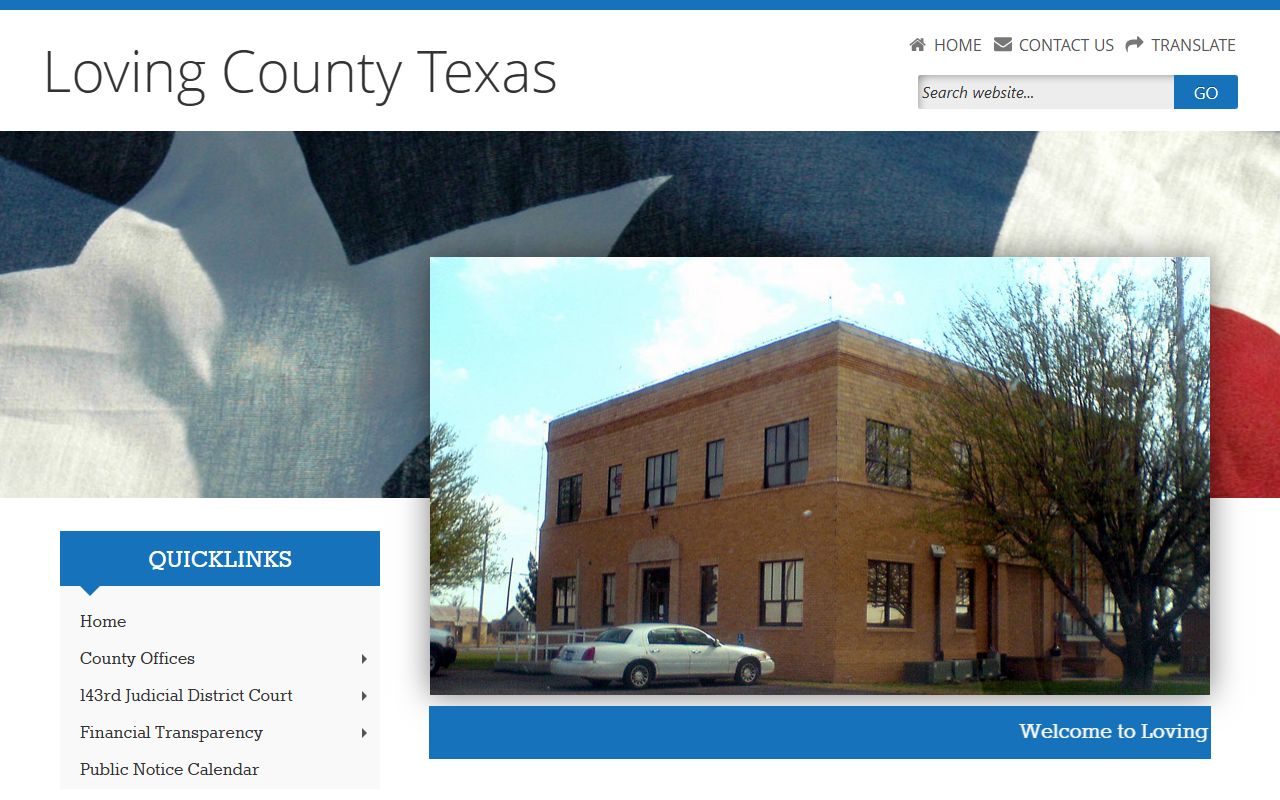
Loving County is headquartered in Mentone, where the courthouse handles all civil court filings, including divorce and dissolution of marriage cases.
How to Find Dissolution of Marriage Records
Because Loving County is so small, it does not have a public online case search portal. You need to contact the District Clerk directly. You can call the office, send a written request by mail, or visit in person. The clerk can look up a case by the names of the parties or by a case number if you have it.
For a broader search that may include Loving County cases, you can try the statewide re:SearchTX system maintained by the Texas Office of Court Administration. This portal covers many Texas district courts and lets you search by party name. Not all counties have their records fully indexed there, but it is worth trying as a first step.
If you need certified copies of a final decree, you must go through the District Clerk. Copies are not available online. You will need to provide the names of the parties, the approximate year of the case, and a cause number if you have one. The clerk will tell you the copy fee and how to pay it.
Note: Loving County records go back to 1931. If you are looking for a very old case, be aware that older files may be stored differently or require extra time to locate.
Filing for Dissolution of Marriage in Loving County
Filing for dissolution of marriage in Loving County follows Texas state law. Under Texas Family Code Chapter 6, at least one spouse must have lived in Texas for six months and in Loving County for at least 90 days before filing. This residency rule applies here just as it does in any other Texas county.
The no-fault ground for divorce in Texas is called "insupportability," defined in Texas Family Code Section 6.001. This means the marriage has broken down to the point where there is no reasonable chance of getting it back on track. Fault grounds are also an option, including cruelty, adultery, abandonment, and felony conviction.
Once the petition is filed, there is a mandatory 60-day waiting period before a judge can grant the divorce, as set out in Texas Family Code Section 6.702. The other spouse must be served with the divorce papers or sign a waiver. If both parties agree on all issues, an agreed decree can be submitted to the judge. If there is a dispute, the case may go to mediation or a hearing.
60-Day Waiting Period: Texas law requires a minimum 60-day wait after the petition is filed before the court can grant a dissolution of marriage. Exceptions exist for cases involving family violence.
Property is divided under Texas Family Code Chapter 7. Texas is a community property state, so anything earned or acquired during the marriage is generally split between the spouses. Each party keeps their separate property, which is what they had before the marriage or got through inheritance or gifts.
What Loving County Dissolution Records Include
A dissolution of marriage case file in Loving County holds several key documents. The first is the Original Petition for Divorce, which is the paper that starts the case. It states the grounds for divorce and what the person filing is asking for. After that, more papers get added as the case moves through the court.
The Final Decree of Divorce is the most important document in the file. It is the judge's signed order that ends the marriage. It lays out how property is divided, any support that was ordered, and if children are involved, the custody and visitation terms. Most people who request records from the District Clerk want a certified copy of this decree for name change purposes or to prove they are no longer married.
Other documents in the file may include proof of service, financial disclosures, agreements between the parties, and any orders issued during the case. Most divorce records are public in Texas. If you are not a party to the case, you can still ask the clerk for copies of the basic documents. Some financial records and information about minor children may be sealed or have restricted access.
Fees and Costs
Filing fees in Loving County are set according to Texas statutes and the court's local fee schedule. Because this county is so small and handles very few cases, fees are generally similar to those in other rural Texas counties. A basic divorce filing costs somewhere in the range of $250 to $350, though the exact amount depends on the type of case and any add-ons like service of process.
Copy fees are charged per page. Certified copies cost more than plain ones. Call the District Clerk at (432) 364-2210 to get the current fee schedule before you send a request. Fees can change, so it is always best to confirm before you send a check or money order.
If you cannot afford the filing fee, you can ask the court to waive it. You file a Statement of Inability to Afford Payment of Court Costs under Texas Rule of Civil Procedure 145. You will need to provide details about your income and expenses. Court forms are available through txcourts.gov or at the courthouse itself.
Note: Contact the District Clerk directly to confirm all current fees before sending payment, as costs can vary and are subject to change.
Legal Help for Loving County Residents
Finding a local attorney in Loving County is not easy given the county's tiny population. Most residents turn to lawyers in nearby Pecos (Reeves County) or Kermit (Winkler County) for family law help. The State Bar of Texas has a lawyer referral service you can reach at (800) 252-9690 or search online at texasbar.com.
Legal aid may be available through Texas RioGrande Legal Aid, which serves West Texas. You can check eligibility and contact information at trla.org. Free legal help is income-based, so not everyone will qualify. TexasLawHelp at texaslawhelp.org has self-help guides, forms, and plain-language explanations of Texas family law that can help you understand the process even without a lawyer.
The Texas State Law Library at sll.texas.gov offers free access to legal research tools and can help you find statutes, forms, and court rules. If you want to file a dissolution of marriage on your own, the Texas Courts website at texascourthelp.gov has guided help tools designed for people without legal representation.
Nearby Counties
These counties are close to Loving County. If you are not sure where to file, check your current home address. You must file in the county where you or your spouse has lived for at least 90 days.