
Menard County Dissolution of Marriage Records
Menard County dissolution of marriage records are held at the District Clerk's office in Menard, Texas. This rural West Texas courthouse is the official keeper of all family law records in the county, including divorce filings and final decrees. If you need to find a case or request copies, you can contact the District Clerk by phone, write a mail request, or visit in person. The office also links to the statewide re:SearchTX portal for online case searches. Records go back to 1858.
Menard County Overview
Menard County District Clerk
The Menard County District Clerk's office is at 206 E. San Saba Avenue in the city of Menard. This is the only district court records office in the county. The office handles all dissolution of marriage filings, stores case files, and provides certified and non-certified copies of court documents. It serves one of the smaller populations in Texas but performs the same functions as any Texas district clerk's office.
Menard County is a small rural county in the 198th Judicial District of West Texas. The city of Menard is the county seat. If you or your spouse meets the residency rule here, you file at this courthouse. Call ahead at (325) 396-4682 before visiting, as staffing may be limited in such a small office. The office closes each day at 4:30 PM.
| Office | Menard County District Clerk |
|---|---|
| Address | 206 E. San Saba Ave. Menard, TX 76859 |
| Mailing Address | P.O. Box 1038 Menard, TX 76859 |
| Phone | (325) 396-4682 |
| Fax | (325) 396-2344 |
| Hours | Monday through Friday, 8:00 AM to 4:30 PM |
| Website | co.menard.tx.us |
How to Find Menard County Divorce Records
You can look up Menard County dissolution of marriage records by contacting the District Clerk directly, visiting the courthouse, or using the statewide re:SearchTX portal online. Because Menard is a small county, the most practical approach for many people is a mail request or a phone call to the clerk's office before making the drive.
The re:SearchTX portal covers all Texas district courts and is free to use. Search by party name or cause number to see if a case is in the system. Once you have the cause number, you can contact the clerk directly to order copies. The portal shows docket entries and case status without requiring any account setup.
For mail requests, send your request to P.O. Box 1038, Menard, TX 76859. Include the full names of both parties, the approximate year of filing, the cause number if you know it, payment for fees, and a return envelope. Call (325) 396-4682 ahead of time to confirm current fees and what the office needs from you.
For any search, have this information ready:
- Full name of at least one party
- Filing year or year of divorce
- Cause number if available
- Photo ID if picking up certified copies in person
The Menard County official website provides contact information and county office details including the District Clerk in Menard.
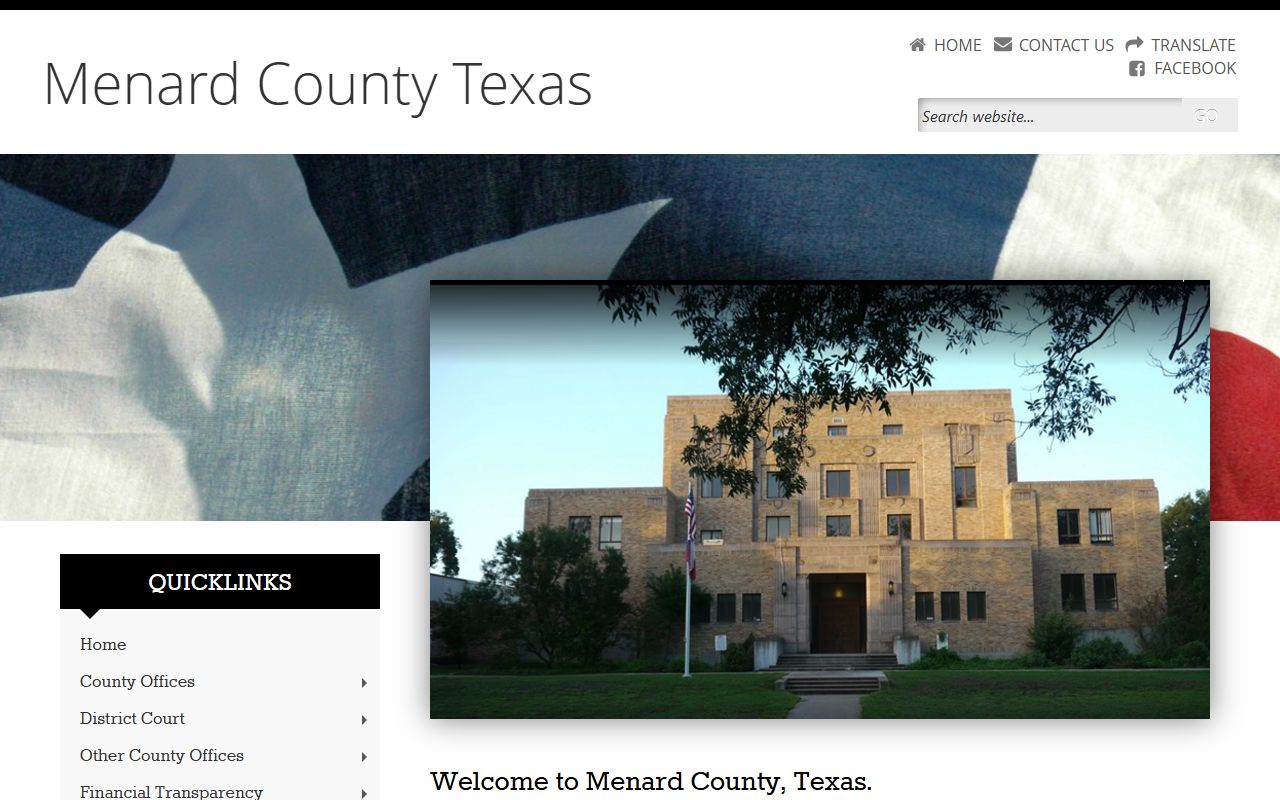
Check the county website before visiting the Menard courthouse to confirm hours, address, and any updated contact details for the District Clerk.
Divorce Filing Process in Menard County
Divorce filings in Menard County are governed by Texas Family Code Chapter 6. The process is the same as any other Texas county. The District Clerk receives new petitions, assigns cause numbers, stores all case documents, and records each step of the case through the final decree.
The residency requirement under Texas Family Code Section 6.301 applies here just as it does statewide. One spouse must have lived in Texas for six months and in Menard County for 90 days before the petition is filed. The rule applies to whichever spouse is filing, but the other spouse can also satisfy it on their own terms.
Texas allows no-fault divorce under Section 6.001 on the ground of insupportability. You state that the marriage cannot be saved because of conflict or discord between the spouses with no chance of reconciliation. No proof of fault is needed. If fault grounds like cruelty, adultery, or abandonment apply, those can be used instead or in addition to the no-fault ground.
To start the process, the petitioner files the Original Petition for Divorce with the District Clerk and pays the required fee. The respondent is served with the papers. If both parties agree on all terms including property, custody, and support, the case can be resolved as an agreed divorce without a contested hearing. Disputed cases follow additional steps up to and including a trial before a judge.
60-Day Waiting Period: All Texas divorces are subject to a 60-day waiting period from the filing date under Section 6.702. This applies in Menard County as it does everywhere in the state. Exceptions exist only in documented family violence cases.
Menard County Dissolution Records Overview
A dissolution of marriage file in Menard County contains the Original Petition for Divorce, service or waiver documents, any agreed or temporary orders, and the Final Decree of Divorce. If the case involves children, the file also includes conservatorship and child support orders. Property and debt division terms are part of the final decree or a separate agreed property division order.
Most of these records are public. Anyone can request a copy at the District Clerk's office. The Final Decree is what most people need when updating legal documents, changing a name, or transferring ownership of property. Certified copies carry the court's seal and are required for many legal purposes. The fee for certified copies includes a per-page charge plus a certification fee.
Some financial records and documents involving minor children may be restricted by court order. If that applies to a file you are asking about, the clerk will let you know. You may need to file a motion with the court to access sealed materials.
For historical records from 1968 to 2006, divorce verification letters are available from Texas DSHS Vital Statistics. These confirm a divorce took place but do not include the full case documents.
Online Tools for Menard County Records
The re:SearchTX portal operated by the Texas Office of Court Administration is the primary free tool for searching Menard County dissolution of marriage records online. It covers all Texas district courts and shows docket data, case status, and filing information. You can search by name or cause number with no login required.
For small rural counties like Menard, re:SearchTX may be the only reliable online resource. The portal links directly to the court system's data, so results are current. Once you find the case details you need, you can reach the District Clerk at (325) 396-4682 to order copies.
Texas DSHS Vital Statistics at dshs.texas.gov provides verification letters for Menard County divorces from 1968 through 2006. These letters confirm the divorce happened and provide basic details without the full file.
The re:SearchTX portal provides free access to case records from Menard County and all other Texas district courts.
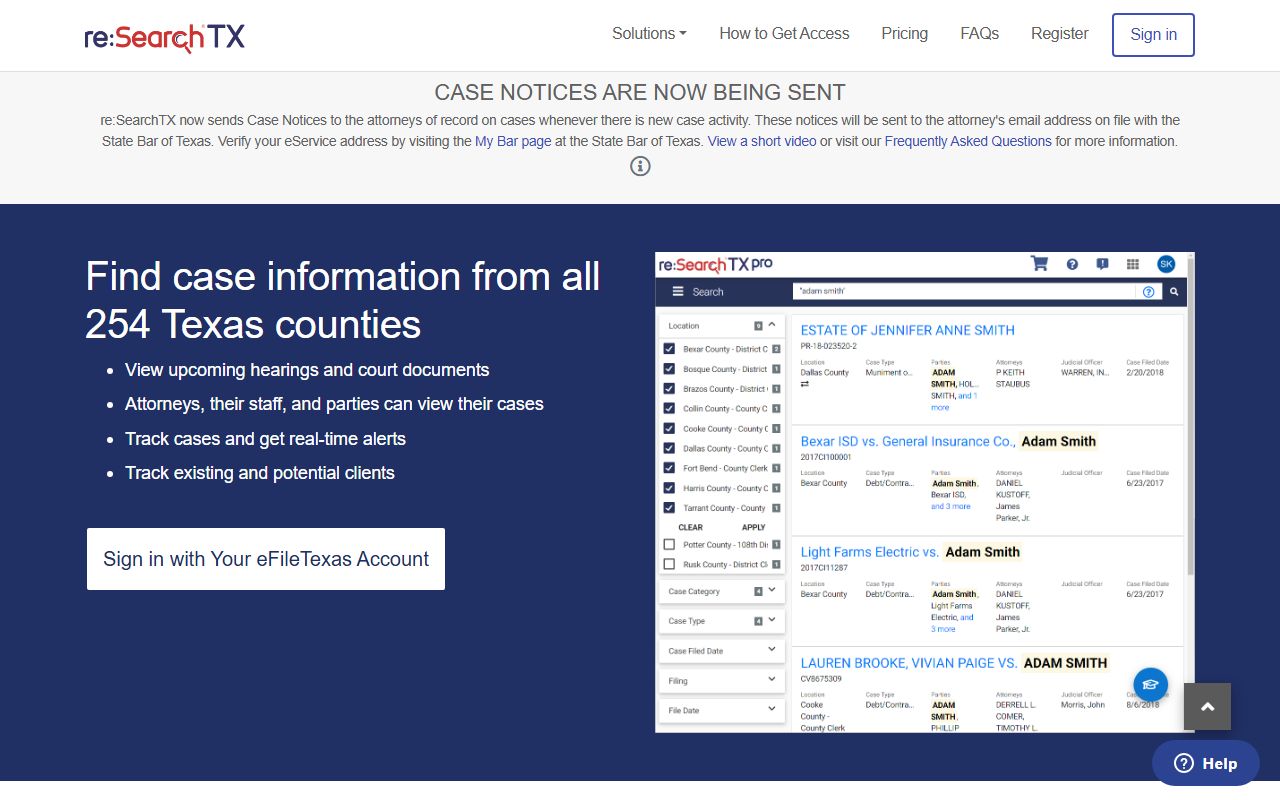
Use re:SearchTX to look up Menard County divorce filings by name or cause number before contacting the District Clerk to request copies.
Legal Help in Menard County
Menard County residents who need legal help with a divorce and cannot afford an attorney have limited but real options. Legal Aid of Central Texas serves the region and handles family law cases for qualifying low-income residents. Call (800) 777-8561 or visit lawcentral.org for more details on eligibility and how to apply.
TexasLawHelp at texaslawhelp.org is especially useful in rural counties where in-person legal help is hard to find. The site has step-by-step guides in English and Spanish, all official court forms, and chat support. The State Bar of Texas lawyer referral line is at (800) 252-9690. Search for nearby attorneys at texasbar.com.
Official court forms for divorce are available at txcourts.gov. These forms are free and accepted at the Menard County courthouse. The Texas Court Help site at texascourthelp.gov provides plain-language guides on what to expect at each stage of the divorce process, including what happens at the final hearing.
The Texas DSHS Vital Statistics office provides divorce verification letters for Menard County records from 1968 through 2006.
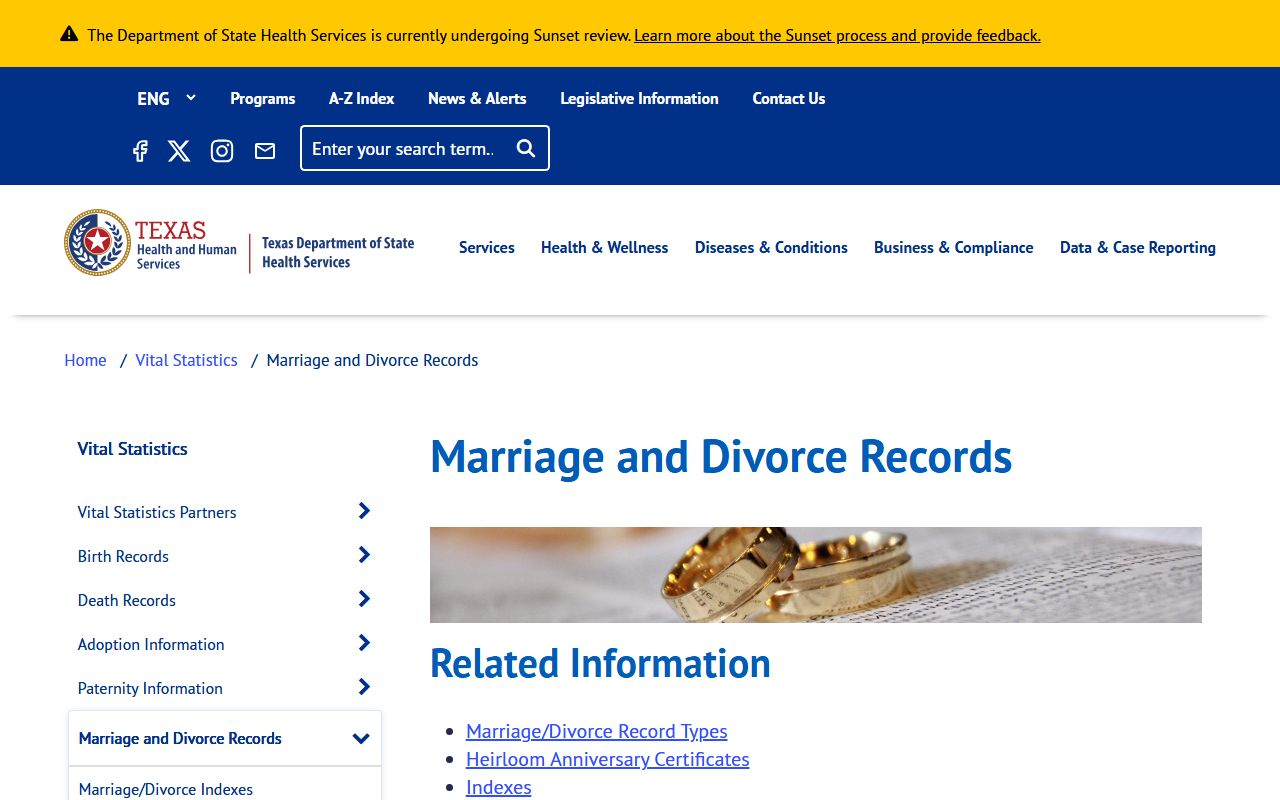
Order a DSHS verification letter when you need to quickly confirm that a Menard County divorce took place without requesting the full case file.
Cities in Menard County
The only city in Menard County is Menard, which is also the county seat. The District Clerk's office is located there. No cities in Menard County meet the threshold for a qualifying city page. All dissolution of marriage cases are filed and handled at the Menard County District Court in Menard.
Nearby Counties
Menard County borders several rural West Texas counties. Verify where you live before filing to confirm you are in the right court's jurisdiction. The 90-day residency rule must be met in the county where you file.