
Search Travis County Dissolution of Marriage Records
Travis County dissolution of marriage records are on file at the District Clerk's office in Austin. The county is home to the state capital and has one of the largest court systems in Texas. If you need to find a divorce case, pull a certified copy of a Final Decree of Divorce, or check on a pending filing, the Travis County District Clerk handles all of it. You can search online through the District Clerk's case information portal or visit the courthouse in downtown Austin. The county sees a high volume of family law filings due to Austin's rapidly growing population.
Travis County Overview
Travis County District Clerk
The Travis County District Clerk's office maintains all dissolution of marriage records filed in the county. The clerk accepts petitions, stores case files, and issues certified copies. The office is in Austin at the Travis County Civil Courts Building. Family law cases are handled by several district courts that specialize in domestic matters.
Travis County processes a large number of dissolution cases each year. Austin's population has grown fast, and so has the court's docket. The District Clerk's online portal lets you search by name or cause number. You can find case status, docket entries, and party names. For full documents or certified copies, you visit the courthouse or request by mail.
| Office | Travis County District Clerk |
|---|---|
| Address |
Travis County Civil Courts Building 1000 Guadalupe St Austin, TX 78701 |
| Phone | (512) 854-9457 |
| Hours | Monday through Friday, 8:00 AM to 5:00 PM |
| Website | traviscountytx.gov/district-clerk |
| Case Search | traviscountytx.gov/district-clerk/case-information |
The Travis County District Clerk's website provides an online case search tool and links to court services for dissolution of marriage and other family law matters.
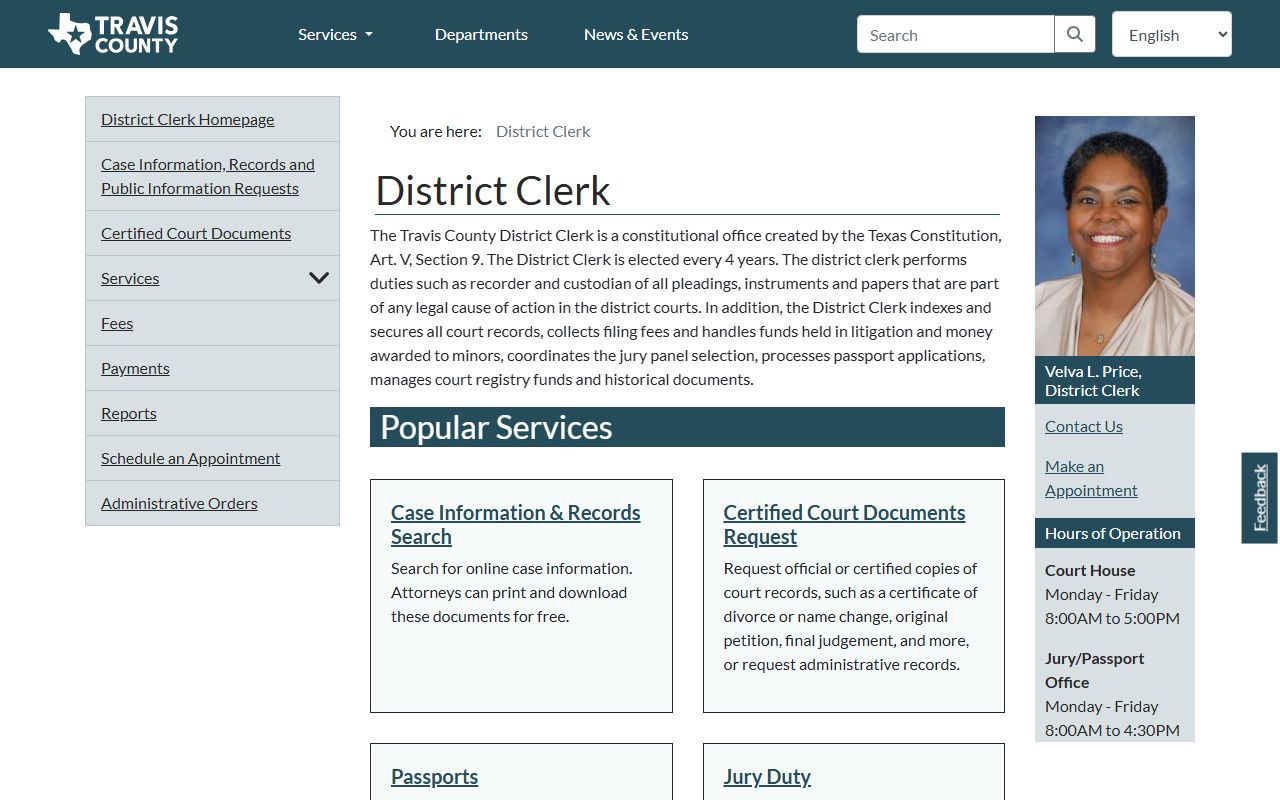
The portal is updated regularly and shows case status, party names, and docket entries for active and closed Travis County dissolution cases.
How to Search Travis County Divorce Records
Travis County offers several ways to look up a dissolution of marriage record. The easiest is the District Clerk's own case search at traviscountytx.gov. You can search by party name or cause number. The system shows basic case data including filing date, court, and case status. It does not show the full text of documents, but it tells you if a case exists and where it stands.
The statewide re:SearchTX system also covers Travis County. This portal pulls data from district courts across Texas. Use it when you are not sure which county a case was filed in, or when you want to confirm a result from the local search. For certified copies of the Final Decree of Divorce, visit the courthouse in person or send a written request with payment to the District Clerk's office.
The Texas DSHS at dshs.texas.gov provides divorce verification letters for cases filed since 1968. This is a statewide service and works for Travis County cases as well. It is useful when you need a quick proof of divorce without getting the full decree.
Note: In-person searches at the courthouse allow you to view the full case file. Staff can help locate records and explain what is in each document.
The re:SearchTX court records portal covers all Texas district courts and is a reliable tool for finding Travis County dissolution of marriage filings by name or case number.
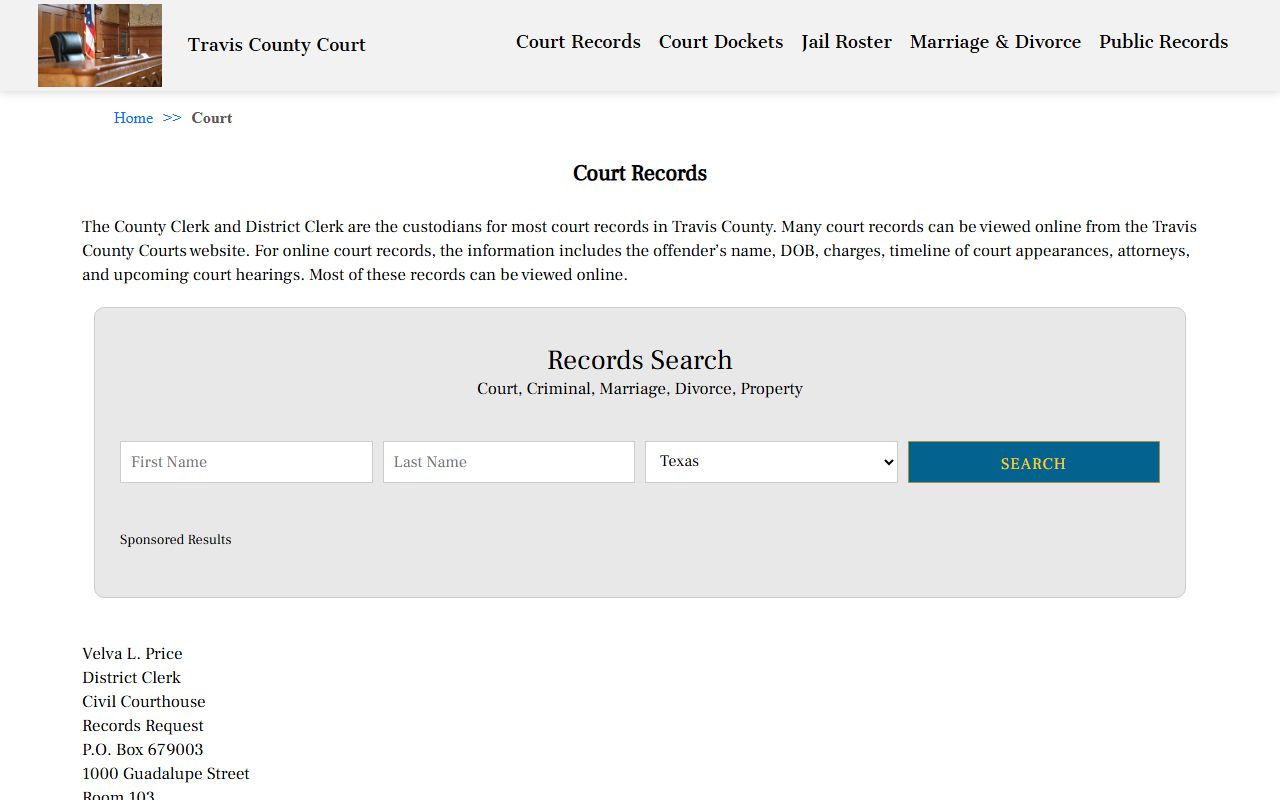
Results include filing dates, party names, case types, and docket history for both open and closed cases across the Travis County district courts.
Travis County Divorce Filing Fees
Filing a dissolution of marriage in Travis County costs approximately $350 for cases without children. Cases involving minor children cost a little more. The base fee covers court costs, statutory surcharges for court facilities, and required fees set by state law. These totals can change based on adjustments made by the clerk's office.
Other costs may include service of process by constable, which runs $75 to $100. Private process servers usually charge $50 to $125. Certified copies of the decree carry a per-page fee. If the case involves children, a parenting education course is often required and costs $30 to $60.
You can ask the court to waive fees if you cannot afford to pay. File a Statement of Inability to Afford Payment of Court Costs under Texas Rule of Civil Procedure 145. The form is available at the courthouse or at txcourts.gov. You will need to document your income and financial situation for the court to review.
Dissolution of Marriage Process in Travis County
Filing for dissolution of marriage in Travis County starts with meeting residency requirements. Under Texas Family Code § 6.301, one spouse must have lived in Texas for at least six months and in Travis County for the past 90 days. Austin residents who meet this standard file at the courthouse on Guadalupe Street.
Texas uses both no-fault and fault grounds. The most common is insupportability under Texas Family Code § 6.001, which means the marriage cannot be saved due to ongoing conflict. Fault grounds include cruelty, adultery, abandonment, felony conviction, and confinement in a mental institution. Most Travis County filers choose the no-fault route.
After filing the Original Petition for Divorce, the other spouse must be served or sign a waiver. A mandatory 60-day waiting period applies under Texas Family Code § 6.702. The court cannot grant the divorce until that period passes, except in family violence cases. Once the waiting period ends and all terms are resolved, the judge signs the Final Decree of Divorce and the case is closed.
Travis County courts deal with contested cases regularly. If both sides cannot agree on property, custody, or support, the case may go to mediation first. Courts in Travis County often require mediation before setting a trial date. Property division follows Chapter 7 of the Family Code, and any child-related orders follow Chapter 153.
Travis County Dissolution Records: What to Expect
A Travis County dissolution of marriage file contains all documents from start to finish. The Original Petition starts the record. From there, the file grows to include citations, service returns, temporary orders, financial affidavits, agreed orders, and ultimately the Final Decree of Divorce. Cases with children also include parenting plans, conservatorship orders, and child support worksheets.
The Final Decree of Divorce is the document most people need. It ends the marriage and sets out all the terms, from who gets the house to how visitation works. You need a certified copy for name changes, Social Security updates, deed transfers, and insurance changes. Travis County District Clerk staff can provide certified copies for a fee. Most Travis County dissolution of marriage records are public, though exhibits containing sensitive financial data may be sealed by court order.
Legal Help for Travis County Residents
Austin and Travis County have several legal aid options. Legal Aid of Central Texas at lawcentral.org serves low-income residents in the Austin area. Call (800) 777-8561 to ask about eligibility. They handle family law matters including dissolution of marriage, custody, and protective orders for qualifying clients.
The Austin Bar Association at austinbar.com runs a lawyer referral service for people who need help finding a family law attorney. Call (512) 472-8303. The State Bar of Texas referral line at (800) 252-9690 is also available. TexasLawHelp at texaslawhelp.org has self-help guides, forms, and plain-language explanations of Texas divorce law. Official court forms are at txcourts.gov. For research help, the Texas State Law Library at sll.texas.gov is located in Austin and is open to the public.
Cities in Travis County
Travis County includes Austin and several surrounding communities. All dissolution of marriage cases are filed at the Travis County District Court.
Nearby Counties
These counties border Travis County. Residency determines where you file. Make sure you have lived in Travis County for at least 90 days before filing here.