
Lubbock Dissolution Of Marriage
Lubbock dissolution of marriage records are filed and maintained at the Lubbock County District Clerk's office on Broadway in downtown Lubbock. If you need to find a divorce case, request a copy of a Final Decree, or check on a pending dissolution, the District Clerk is where you start. Lubbock is both a city and county seat, which means you do not have to drive to a separate town to file. With a population over 263,000, Lubbock is the tenth largest city in Texas and the hub of the South Plains region. You can search records in person or contact the clerk's office to ask about request procedures.
Lubbock Overview
Lubbock County District Clerk
Lubbock residents file dissolution of marriage cases at the Lubbock County District Court. The courthouse is in downtown Lubbock on Broadway Street. Since Lubbock is the county seat, you do not need to travel to another city. The District Clerk's office handles all family law filings and keeps all public case records available for review.
Lubbock County covers the city of Lubbock and surrounding areas. The county is entirely within Lubbock County, unlike some larger Texas cities that span multiple counties. That makes it straightforward. If you live in Lubbock, you file in Lubbock County.
| Office | Lubbock County District Clerk |
|---|---|
| Address | Lubbock County Courthouse 904 Broadway Street Lubbock, TX 79401 |
| Phone | 806-775-1010 |
| Hours | Monday through Friday, 8:00 AM to 5:00 PM |
| Website | co.lubbock.tx.us |
The courthouse is in downtown Lubbock near the intersection of Broadway and Mac Davis Lane. Street parking and nearby lots are available. You need a valid photo ID to enter. Staff can look up cases by name or cause number and help you with copy requests at the clerk's window.
Search Lubbock Dissolution Cases
The re:SearchTX portal is the main tool for searching Lubbock County dissolution records online. This free statewide system covers Lubbock County District Court and lets you search by party name or cause number. Results include filing dates, case status, and docket entries. Some cases have document images available through the portal.
You can also search in person at the Lubbock County Courthouse on Broadway. Staff can pull case records and make copies on the spot. Certified copies cost more than plain photocopies. If you are mailing in a request, include the full names of both parties, the filing year, and a copy of your ID. Mail requests to the Lubbock County District Clerk at the Broadway address.

The Lubbock County official website provides access to the District Clerk's office and other county services for residents searching dissolution of marriage records.
Texas Tech University School of Law is in Lubbock and runs clinical programs that may offer free or reduced-cost legal help. Contact the law school clinic to ask if they have availability for family law cases.
Filing a Dissolution in Lubbock
Lubbock residents file for dissolution of marriage under Texas Family Code Chapter 6. The case is filed at the Lubbock County District Court, and the District Clerk manages all paperwork from the initial petition through the final decree.
Residency requirements apply under Texas Family Code Section 6.301. At least one spouse must have lived in Texas for at least six months. That same spouse must have lived in Lubbock County for at least 90 days before filing. If you recently moved to Lubbock from elsewhere in Texas, make sure you meet the 90-day county residency requirement first.
The most common ground for dissolution in Texas is "insupportability" under Texas Family Code Section 6.001. This no-fault ground means the marriage has broken down because of conflict or discord, and there is no reasonable chance of saving it. You do not need to prove anyone did anything wrong. Fault grounds like adultery, cruelty, abandonment, felony conviction, and living apart for three years are also available under the Texas Family Code.
The filing process starts when one spouse files an Original Petition for Divorce and a Civil Case Information Sheet with the Lubbock County District Clerk. The other spouse must be served with the petition or sign a Waiver of Service. After that, the case proceeds through negotiation or litigation depending on whether the parties agree. Texas law requires a 60-day waiting period after the petition is filed before the judge can sign the Final Decree of Dissolution.
Texas law requires a mandatory 60-day waiting period from the date of filing before a dissolution of marriage can be finalized by a judge. Lubbock County has family law district courts that handle dissolutions and custody matters.
re:SearchTX and Lubbock County
The re:SearchTX portal lets you search Lubbock County District Court records online without going to the courthouse. The system is free and maintained by the Texas Office of Court Administration. You can look up dissolution cases by party name or cause number. It shows filing history, docket activity, and case status. Some document images may be viewable directly through the portal.
For cases not in re:SearchTX or for certified copies, contact the Lubbock County District Clerk's office at 806-775-1010. Staff can verify whether a case exists and explain the copy request process. Standard copy fees in Texas are typically $1.00 per page for plain copies and $1.00 per page plus a $5.00 certification fee for certified copies.
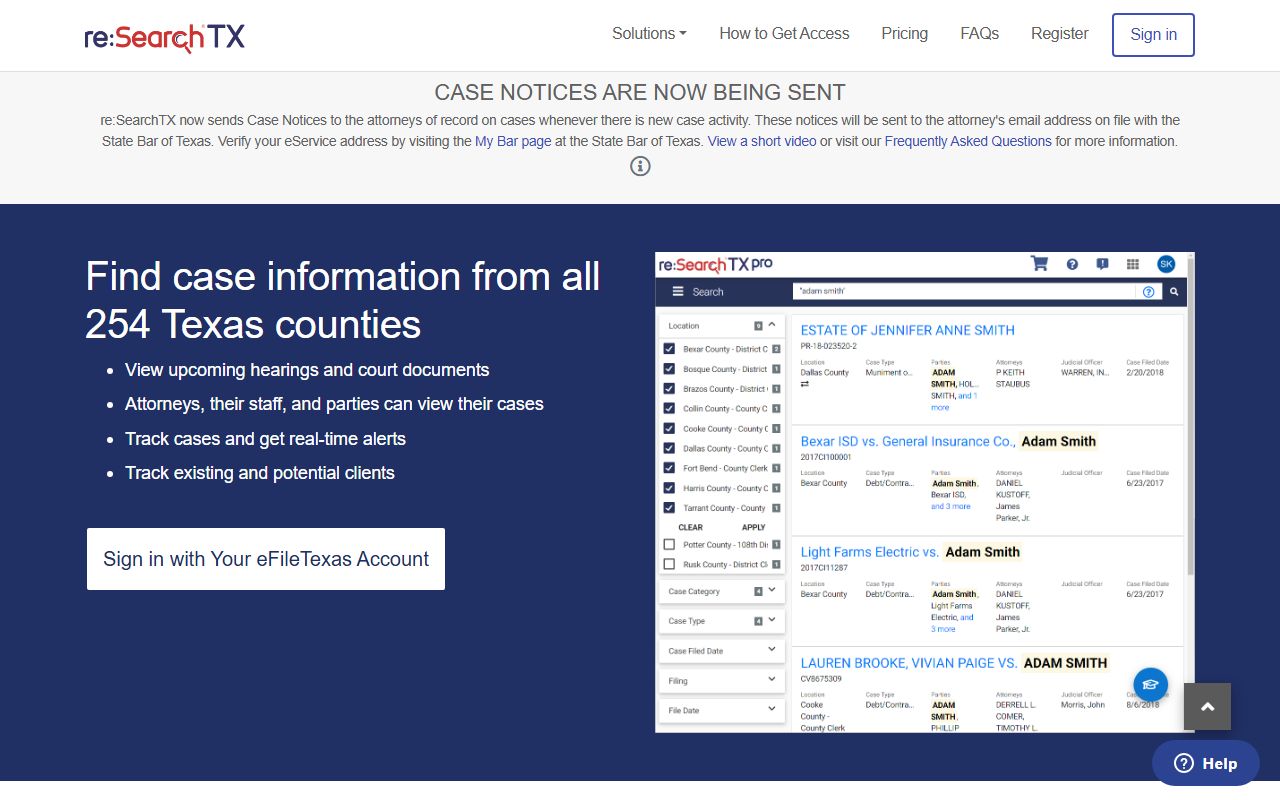
re:SearchTX is the Texas courts' official statewide portal for searching District Court cases including dissolution of marriage records in Lubbock County.
DSHS Divorce Records for Lubbock
The Texas Department of State Health Services keeps a statewide index of divorce records going back to 1968. You can request a certified divorce verification letter from the DSHS Vital Statistics Unit for $20. This letter confirms a divorce was recorded in the state but does not include the full court decree or case file.
For the complete Final Decree or certified court documents, you need to contact the Lubbock County District Clerk directly. The DSHS letter is a good option when you just need to prove a dissolution happened and the full file is not required.
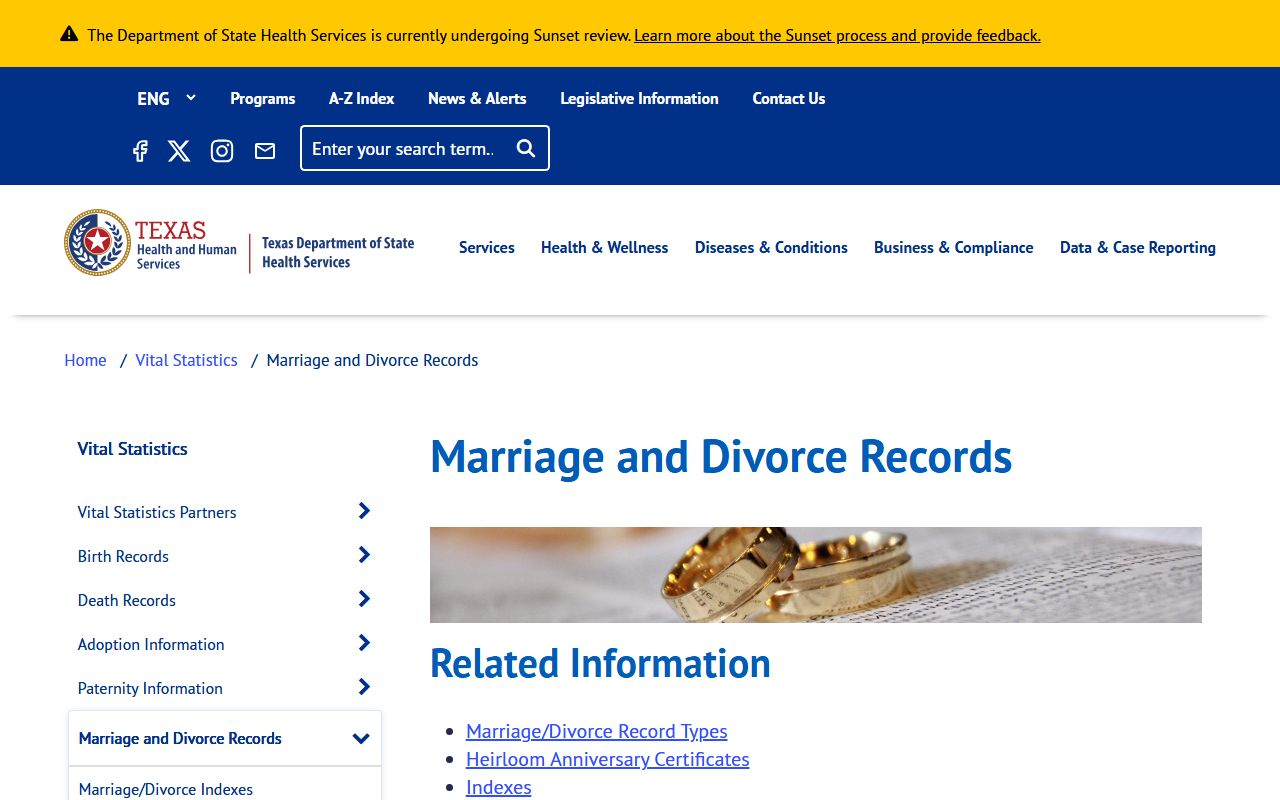
Texas DSHS Vital Statistics processes certified divorce verification letters for dissolutions recorded in Texas since 1968, including those filed in Lubbock County.
Legal Help in Lubbock
Legal Aid of Northwest Texas has a Lubbock office and provides free family law assistance for people who meet income guidelines. The Lubbock Area Bar Association offers referrals to local family law attorneys. Texas Tech University School of Law runs clinical programs that sometimes take family law cases at reduced or no cost. Contact their clinic office to ask about availability.
For self-help resources, TexasLawHelp.org has free step-by-step guides for filing dissolution of marriage without an attorney. Official Texas court forms are available at txcourts.gov/forms. The Texas Court Help website has plain-language explanations of how the dissolution process works. The Texas State Law Library offers free research tools and can point you to relevant statutes and procedural guides.
The Texas Tech University Southwest Collection and Special Collections Library also maintains regional records and may have historical information related to older dissolution cases filed in Lubbock County.
Nearby Cities
These nearby qualifying Texas cities also have dissolution of marriage information pages.
Lubbock County Dissolution Records
Lubbock is the county seat of Lubbock County, and all dissolution of marriage cases are filed at the Lubbock County District Court. For more details on county court procedures, filing fees, and records access, visit the Lubbock County dissolution records page.