
Calhoun County Dissolution of Marriage Records
Calhoun County dissolution of marriage records are maintained by the District Clerk in Port Lavaca, the county seat on the Texas Gulf Coast. Divorce filings and final decrees are on file at the Calhoun County Courthouse. Records date back to 1846. You can request copies in person or by mail, and staff can search by party name or cause number.
Calhoun County Overview
Calhoun County District Clerk
The District Clerk in Calhoun County stores and manages all dissolution of marriage records. The 122nd Judicial District handles family law cases for the county. Port Lavaca is the county seat and home to the courthouse. Calhoun County sits on the Gulf Coast between Victoria and Corpus Christi, and the District Clerk serves everyone in the county who needs to file for divorce or access existing records.
Staff at the District Clerk's office can search records by party name or cause number. In-person requests can often be filled the same day. Mail requests take longer but work well for simple copy requests. Call the office ahead of time to confirm fees and ask if there is a wait on complex records requests.
| Office | Calhoun County District Clerk |
|---|---|
| Address |
Calhoun County Courthouse 211 S Ann St Port Lavaca, TX 77979 |
| Website | calhouncotx.org |
| Hours | Monday through Friday, 8:00 AM to 5:00 PM |
| District Court | 122nd Judicial District |
Visit calhouncotx.org for current contact details, phone numbers, and any updates to office procedures. Calling before your visit or before mailing a request is a good idea in any small county.
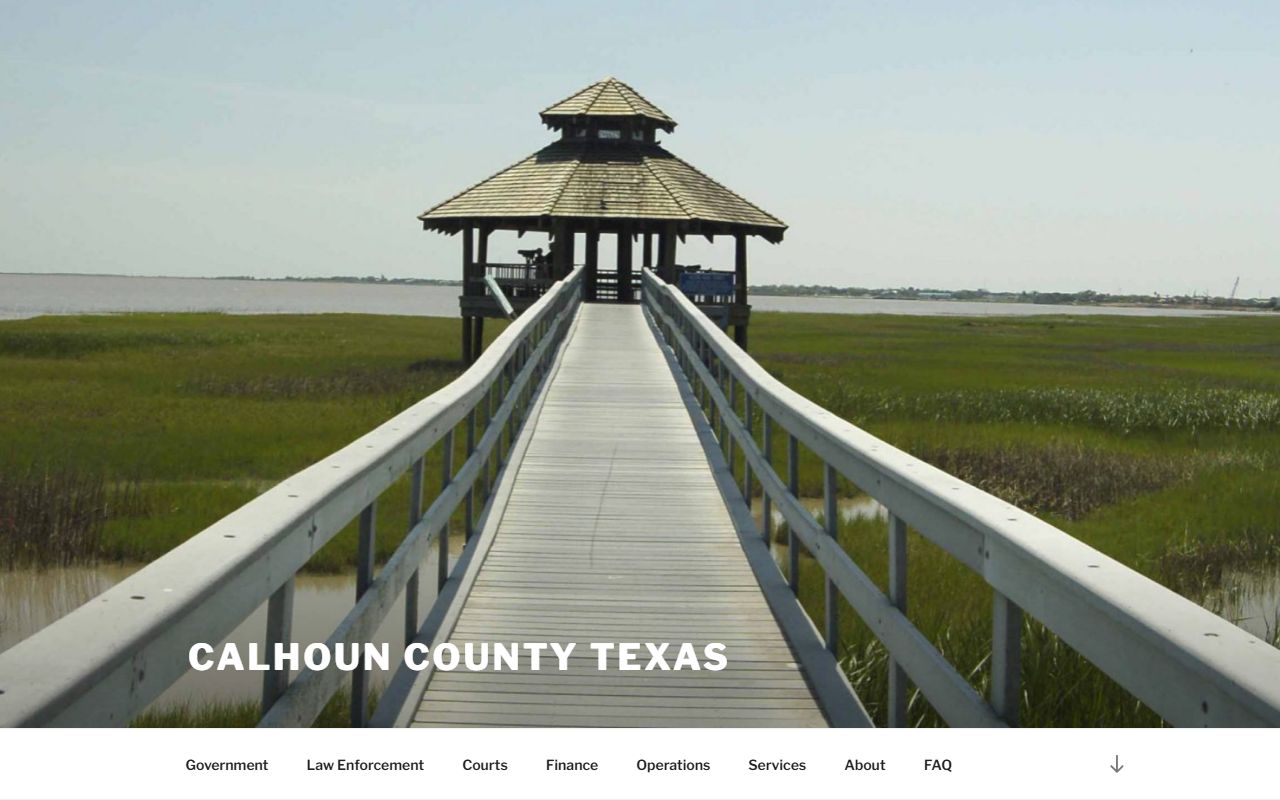
The Calhoun County official website provides direct contact information for the District Clerk's office in Port Lavaca.
Searching Calhoun County Divorce Records
You can search dissolution of marriage records in Calhoun County in person at the courthouse or by mail. Start by checking the statewide re:SearchTX portal to see if case index data is available online. Search by party name to locate the cause number. That makes any follow-up request to the District Clerk faster and easier.
For in-person searches, visit the District Clerk's office in Port Lavaca during business hours. Bring a valid photo ID and the names of both parties if you don't already have the cause number. Staff will look up the case and tell you which documents are on file. Certified copies can usually be prepared the same day.
Mail requests require a written letter to the District Clerk. Include the names of both spouses, the approximate year of the divorce, cause number if known, your return address, and a check or money order. A self-addressed stamped envelope helps speed the return of documents. Allow 5 to 10 business days for processing.
Divorce Filing in Calhoun County
Filing for dissolution of marriage in Calhoun County requires meeting the residency test under Texas Family Code § 6.301. One spouse must have lived in Texas for six months and in Calhoun County for at least 90 days. The Original Petition for Divorce is filed at the District Clerk's office in Port Lavaca.
Texas law allows no-fault divorce. The ground of "insupportability" under Texas Family Code § 6.001 means the marriage cannot continue due to conflict with no realistic chance of reconciliation. Most Texas divorces use this ground. Fault grounds are also available if cruelty, adultery, or other statutory reasons apply to your case.
After the petition is filed, Texas law requires a 60-day waiting period under Texas Family Code § 6.702. The divorce cannot be granted until those 60 days pass. Once the judge signs the Final Decree of Divorce, the case is complete and the decree becomes part of the permanent record at the District Clerk's office. Property is divided under Texas Family Code Chapter 7.
Fees for Calhoun County Dissolution Records
Filing for divorce in Calhoun County costs around $300 for most cases. Cases with children may be slightly higher. The exact fee depends on the type of case and statutory surcharges that apply. Call the District Clerk to confirm the current fee schedule.
Copies of divorce records are $1.00 per page. Certified copies add $5.00 per document. If a name search is required and you do not have a cause number, a $5.00 search fee may apply. Most small county offices accept cash and checks. Ask when you call whether credit cards are accepted.
Fee waivers are available for qualifying individuals. File a Statement of Inability to Afford Payment of Court Costs under Texas Rule of Civil Procedure 145. Forms are at txcourts.gov/forms. The court will review your situation and decide whether to waive or reduce your costs.
What Calhoun County Divorce Records Include
A dissolution of marriage file in Calhoun County contains all documents from the initial filing to the final decree. The Original Petition starts the case. The Final Decree of Divorce ends it. Everything in between is part of the permanent file, including service papers, temporary orders, financial disclosures, and any agreements between the parties.
The Final Decree sets out all court decisions: property division, child conservatorship, possession schedules, child support, and any spousal maintenance. This document is public and available to anyone who requests it. Certified copies are needed for official purposes. Most other documents in the file are also public unless specifically sealed by court order.
Calhoun County divorce records go back to 1846. Historical records may require additional time to locate and may be stored differently from modern cases. Call the clerk to ask about availability and access for older records.
Legal Help in Calhoun County
If you need an attorney for a divorce in Calhoun County, the State Bar of Texas at (800) 252-9690 offers a lawyer referral service. They can connect you with family law attorneys in the coastal South Texas area.
For those who qualify based on income, Lone Star Legal Aid at (800) 733-8394 provides free civil legal help in many Texas counties. Texas Law Help has free guides, forms, and step-by-step instructions for people filing their own divorce. The site is bilingual. The Texas Court Help website also has plain-language videos and guides for self-represented litigants navigating the family court system.
Nearby Counties
These counties border Calhoun County on the Texas Gulf Coast. File in the county where you live and have met the 90-day residency requirement.