
Dallas County Dissolution of Marriage Records
Dallas County dissolution of marriage records are maintained by the District Clerk at the George L. Allen Sr. Courts Building in downtown Dallas. The county is the second most populous in Texas, with over 2.6 million residents, and handles thousands of divorce cases each year through its family district courts. You can search for cases online, request certified copies by email, or visit the courthouse in person. Whether you are looking for your own records or researching a past case, the Dallas County District Clerk is the official source for all dissolution of marriage filings and decrees.
Dallas County Overview
Dallas County District Clerk
The Dallas County District Clerk's office manages records for all district courts, including the family district courts that handle dissolution of marriage cases. The Civil and Family Records division is the right place to contact for divorce documents. John F. Warren currently serves as County Clerk, though District Court records are separate from the County Clerk's office. For dissolution records, you want the District Clerk specifically.
The Civil and Family Records office is located on the basement floor of the main courthouse building at 600 Commerce Street in downtown Dallas. Dallas County has multiple family district courts that divide the caseload for the large population the county serves. These courts handle divorces, custody, support, and related family law matters for all of Dallas and the surrounding communities within the county.
| Office | Dallas County District Clerk - Civil & Family Records |
|---|---|
| Address |
600 Commerce Street, Basement "B" Floor West Dallas, TX 75202 |
| Phone | (214) 653-7421 |
| Records Email | DCRecords@dallascounty.org |
| Hours | Monday through Friday, 8:00 AM to 5:00 PM |
| Website | dallascounty.org/government/district-clerk |
The Dallas County records portal gives access to case information and documents for civil, family, and probate courts. Registration is not required for basic public access.
Dallas County provides an online portal for searching case information and court records, including dissolution of marriage filings.
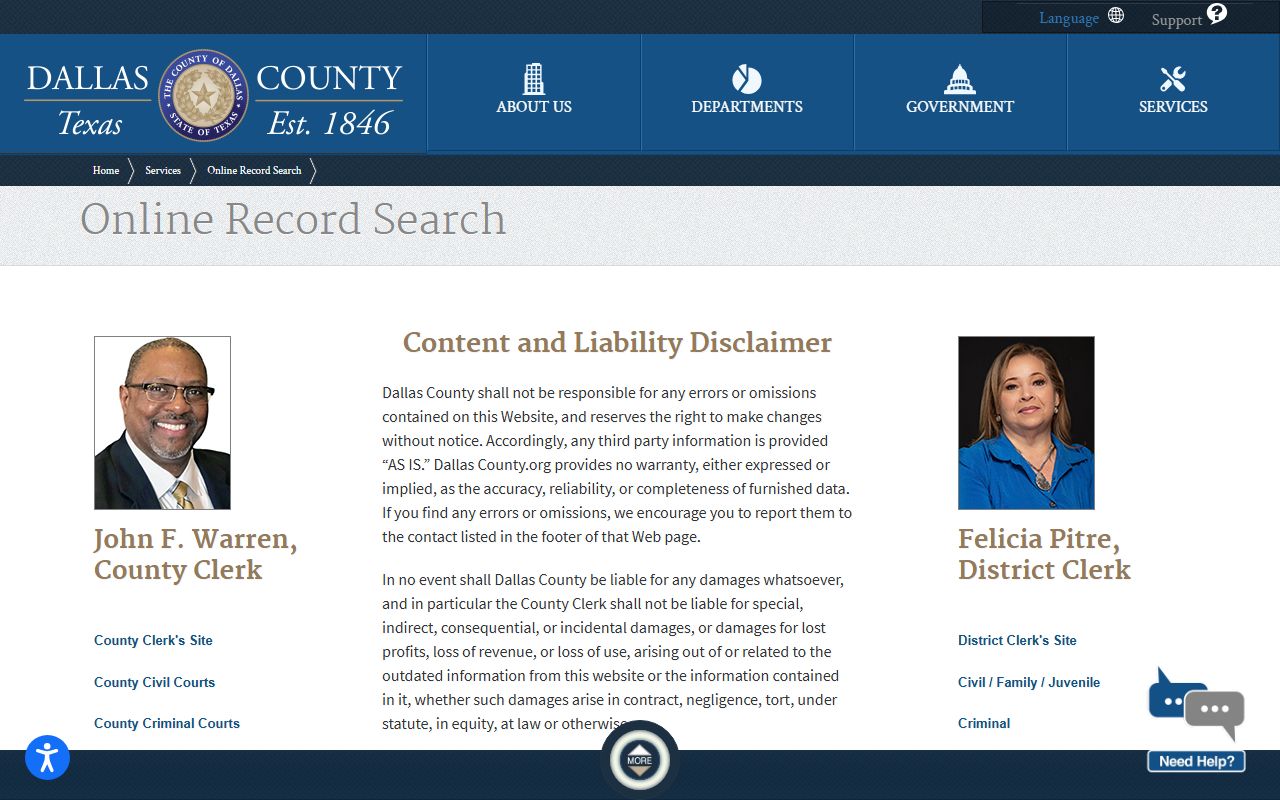
The records portal lets you search by party name, case number, or date range for family court filings without needing to create an account.
The Dallas County Courts portal at dallascountycourts.org provides case search tools across multiple court systems in the county.
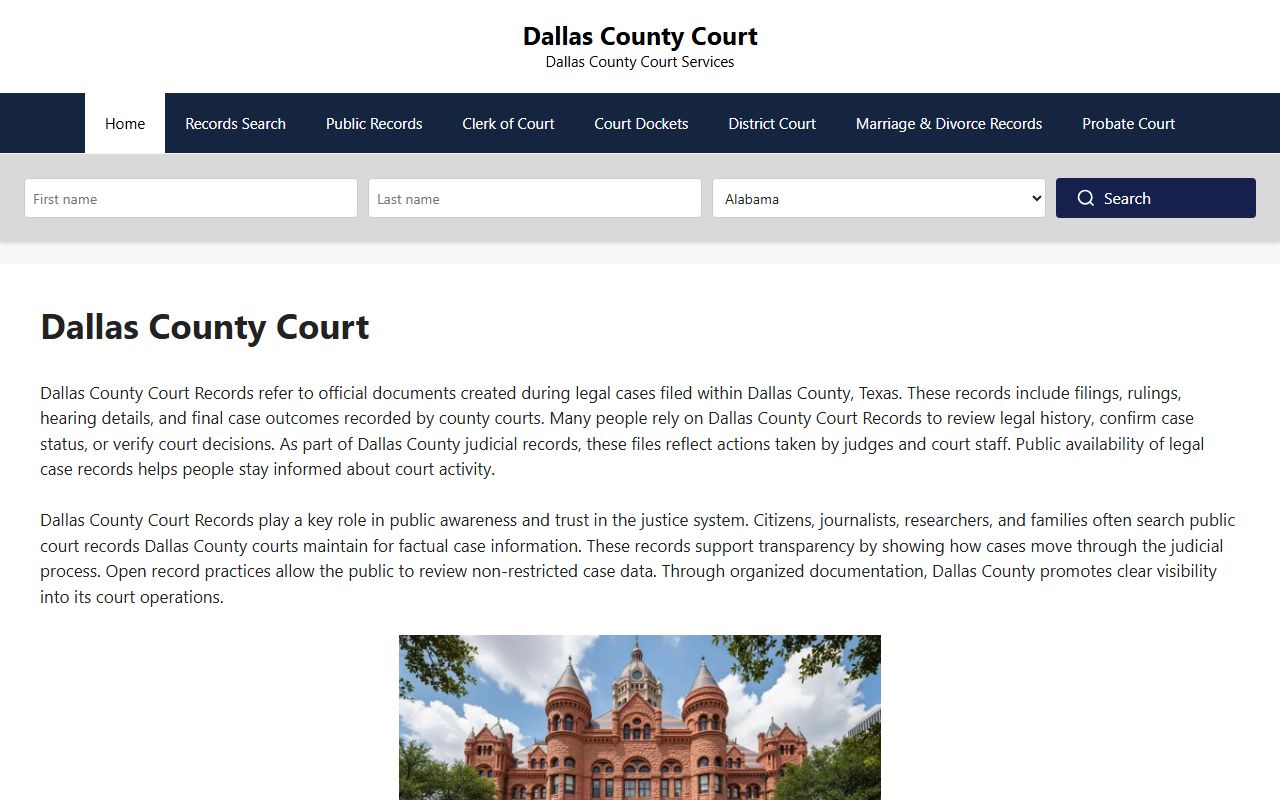
Use the courts portal to look up dissolution cases by party name or case number across the family district courts in Dallas County.
How to Search Dallas County Divorce Records
Dallas County has several ways to find dissolution of marriage records. Online is the easiest starting point. The District Clerk's case search tool at dallascounty.org lets you search by party name or case number. You can also use dallascountycourts.org, which searches across multiple court systems.
For a certified copy of a final decree, Dallas County uses an email request process. Send a completed Request For Divorce Decree form to DCRecords@dallascounty.org. The clerk's office will respond with a cost estimate. Once you pay online, they mail the certified copy to you. This process usually takes a few business days. You can also visit the basement-level Civil and Family Records office in person at 600 Commerce Street in Dallas.
Note: Dallas County family court records are generally not available for full public viewing online due to confidentiality protections for sensitive case details. Case index information (names, dates, case numbers) is public. Detailed documents require a formal request.
The Dallas County District Clerk office handles all official requests for dissolution of marriage records and provides certified copies of final decrees.
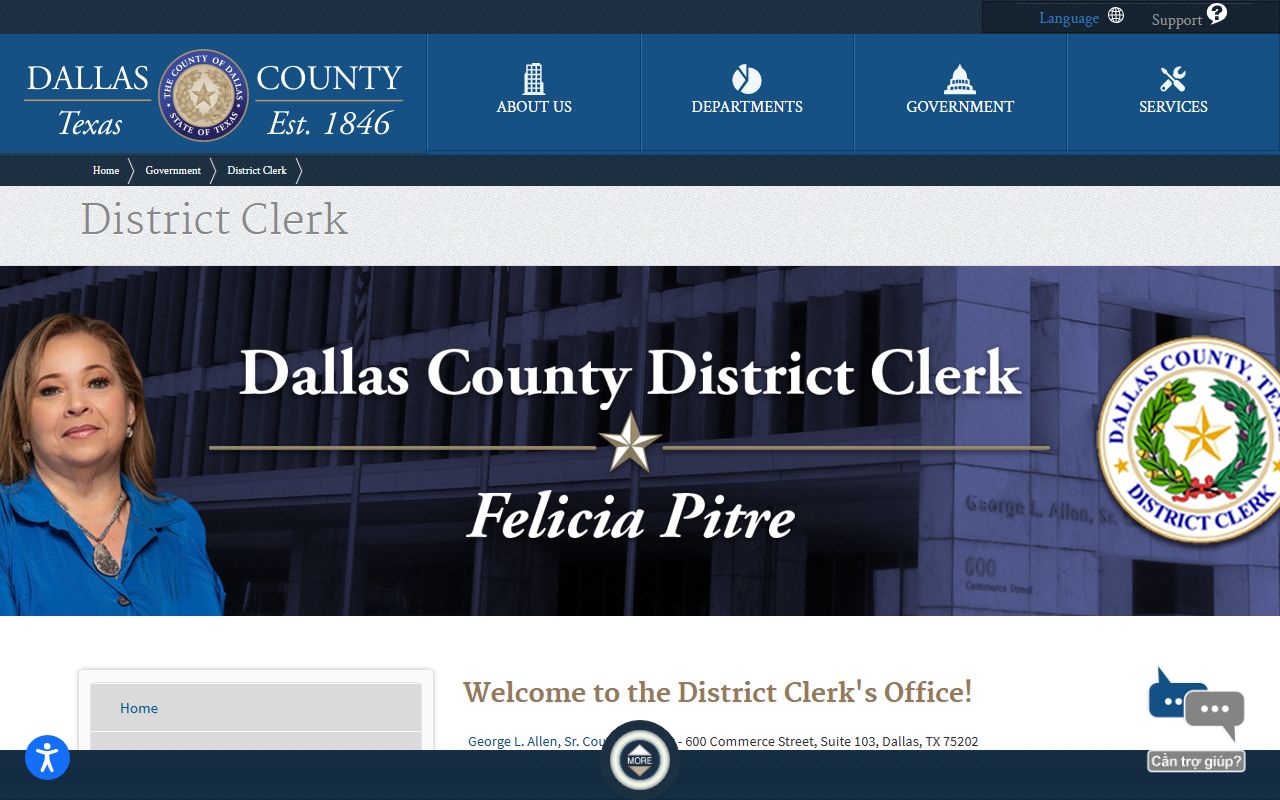
Visit the District Clerk page on the county site for the current request form and instructions on how to submit your records request by email or in person.
The statewide re:SearchTX portal also includes Dallas County cases. Attorneys access full documents through their eFile Texas credentials on that platform.
Filing for Dissolution of Marriage in Dallas County
Divorce filings in Dallas County follow Texas Family Code Chapter 6. One spouse must have lived in Texas for six months and in Dallas County for 90 days before filing the petition. The petition is filed with the District Clerk and assigned to one of the family district courts. Dallas County has multiple family courts that rotate case assignments.
The most common ground is insupportability under Texas Family Code Section 6.001, which is the no-fault option. It means the marriage has broken down because of ongoing conflict or discord with no realistic hope of working things out. Fault grounds including cruelty, adultery, abandonment, felony conviction, and three-year separation are also available.
After filing, the mandatory 60-day waiting period under Texas Family Code Section 6.702 must pass before any judge can sign a final decree. The respondent must be served with the petition or must sign a waiver of service. Dallas County has a high volume of agreed divorces where both spouses reach a full agreement and appear together at a brief final hearing. Contested cases in Dallas go through the family court docket, which may include temporary orders hearings, mediation, and possibly trial.
Dallas County courts follow standing orders in family cases regarding conduct of the parties during the pendency of the case. These orders restrict things like spending marital funds, removing children from the state, or canceling insurance policies. Property division follows Texas Family Code Chapter 7. The court divides community property in a just and right manner, and separate property stays with its owner. Spousal maintenance, when awarded, follows the eligibility and duration rules under Texas Family Code Chapter 8.
Dallas County Divorce Filing Fees
Filing a dissolution of marriage case in Dallas County costs approximately $350 for a standard divorce without children. Cases with children run slightly higher. The exact amount depends on the specific services required and any add-on fees for temporary restraining orders or citations. Dallas County accepts cash, check, and credit card for court payments.
Copy fees are $1 per page for standard copies and $5 for certification on top of the per-page cost. A search fee applies when the clerk performs an assisted lookup. Online payment is available for some services through the county portal.
For people who cannot afford filing fees, a Statement of Inability to Afford Payment of Court Costs is available at the courthouse and at txcourts.gov. You file this form with your petition. The court reviews it and rules on whether you qualify for a fee waiver. You need to provide proof of income or public benefits receipt.
Tip: Confirm the current fee schedule with the Dallas County District Clerk before filing. Fees can change, and the clerk's office at (214) 653-7421 can give you an accurate current amount.
What Dallas County Dissolution Records Contain
A dissolution of marriage file in Dallas County includes the original petition for divorce, citation and proof of service or a waiver, any temporary orders, financial affidavits, property settlement agreements, and the final decree. Cases with children also contain conservatorship orders, a possession schedule, child support orders, and medical support orders. All these documents are part of the official case file.
The Final Decree of Divorce is the core document. It formally ends the marriage and sets out all terms. You need a certified copy to change your name, update your Social Security records, or prove marital status. Dallas County divorce records typically show the names of both parties, the case number and filing date, the assigned court, the grounds for divorce, property and debt division terms, and any orders regarding children or support.
Most dissolution records in Dallas County are public. Sensitive information including Social Security numbers, bank account numbers, addresses, dates of birth, and details about minors may be protected from disclosure. The District Clerk's office can advise you on what is available in any specific case.
For a statewide divorce verification dating back to 1968, contact Texas DSHS Vital Statistics at (888) 963-7111 or order online at Texas.gov. The state charges $20 per search and issues a letter confirming the record. It is not a certified copy of the decree itself.
Legal Help for Dallas County Divorce Cases
Dallas County has many family law resources. The State Bar of Texas at (800) 252-9690 offers a lawyer referral service. Search for attorneys at texasbar.com. Dallas has a large pool of family law attorneys and several legal aid organizations that handle divorce and custody cases.
Lone Star Legal Aid serves the Dallas area and provides free legal assistance to income-qualified clients in family law matters. Their website at lonestarlegal.org explains eligibility. The Dallas Volunteer Attorney Program also offers free legal clinics. For self-help resources, TexasLawHelp.org has guides on Texas divorce, custody, and support that walk you through each step of the process.
Official Texas court forms for divorce are free at txcourts.gov. The Texas State Law Library provides free online access to all Texas statutes and many legal guides. For general questions about the court system, the Texas Courts FAQ at txcourts.gov is a useful reference.
Note: The Dallas County Law Library is also available to the public at the courthouse for legal research assistance.
Cities in Dallas County
Dallas County includes a large number of cities and communities, all served by the Dallas County District Court system for dissolution of marriage cases.
Other communities in Dallas County include Grand Prairie (partially), Carrollton (partially), Farmers Branch, Duncanville, DeSoto, Cedar Hill, Lancaster, and many more. All dissolution of marriage cases go through the Dallas County District Court system regardless of the specific city within the county.
Nearby Counties
Several counties border Dallas County. If you are unsure whether your case belongs in Dallas County, look at where you have lived for the past 90 days.