
Search Ellis County Dissolution Of Marriage Records
Ellis County dissolution of marriage records are on file at the District Clerk's office in Waxahachie. This growing Dallas-area county handles dissolution filings through the 40th, 378th, and 443rd Judicial District Courts. If you need to search for a dissolution case, get a certified copy of a final decree, or check the status of a filing, the Ellis County District Clerk in Waxahachie is where to go. Records are open to the public and can be accessed in person or by written request.
Ellis County Overview
Ellis County District Clerk
The Ellis County District Clerk in Waxahachie keeps all dissolution of marriage records, including original petitions, decrees, and associated court orders. The office serves three district courts. Family law cases, including dissolution filings, are assigned to one of these courts when they are submitted. Staff can help you locate records and provide copies upon request.
Ellis County is a fast-growing county south of Dallas. Waxahachie serves as the county seat. Residents from communities throughout Ellis County file dissolution cases at the county courthouse in Waxahachie. With population growth in recent years, the county has expanded its court system to include newer district courts to handle increased caseloads. The District Clerk's office can be reached by phone or in person during regular business hours.
| Office | Ellis County District Clerk |
|---|---|
| Address |
Ellis County Courthouse Waxahachie, TX 75165 |
| District Courts | 40th, 378th, and 443rd Judicial District Courts |
| Hours | Monday through Friday, 8:00 AM to 5:00 PM |
How to Find Ellis County Dissolution Records
You can search for Ellis County dissolution of marriage records online through the statewide re:SearchTX portal. This free system indexes cases from all three district courts in Ellis County. Search by party name or cause number to find a case and see basic filing information, court assignment, and docket history.
For certified copies of a Final Decree of Dissolution or other official court documents, you must go through the Ellis County District Clerk. In-person visits allow same-day service in most cases. You can also send a written request by mail. Include the names of both parties, the cause number if you have it, and the year of the dissolution or filing. Attach a check or money order for the estimated fee amount.
When you visit in person, bring a valid photo ID. The clerk can search by name or case number and tell you right away what documents are available. Certified copies include a per-page fee and a certification charge. Plain copies cost less and work fine if you only need to review the file for personal use.
Records needed for an Ellis County dissolution search typically include:
- Full legal name of at least one party
- Approximate year of filing or decree
- Cause number if available
- Photo ID for in-person requests
Note: Grand Prairie has a small portion of its area in Ellis County, but most Grand Prairie dissolution cases are filed in Dallas or Tarrant County. Confirm your address county before filing.
Online Search for Ellis County Cases
The re:SearchTX portal covers Ellis County dissolution cases from all three district courts. You can search at no cost without creating an account. The system shows party names, filing dates, court assignments, and docket entries for each case. This is a good tool for quickly finding a cause number or confirming that a case was filed in Ellis County.
Re:SearchTX is maintained by the Texas Office of Court Administration and includes data from district courts across the state. If you are not sure which county a dissolution was filed in, you can try searching re:SearchTX by name and see which county's records come up. Results include the county name, so you can confirm before requesting copies.
Electronic filing is available through eFile Texas. Attorneys and self-represented filers use this system to submit dissolution petitions, motions, and other documents electronically to Ellis County district courts. If you filed through eFile Texas, you can access your case in re:SearchTX using the same credentials.
Below is a screenshot of the re:SearchTX system used to access Ellis County dissolution records.
The re:SearchTX portal provides free online access to Ellis County dissolution of marriage case records across all three district courts.
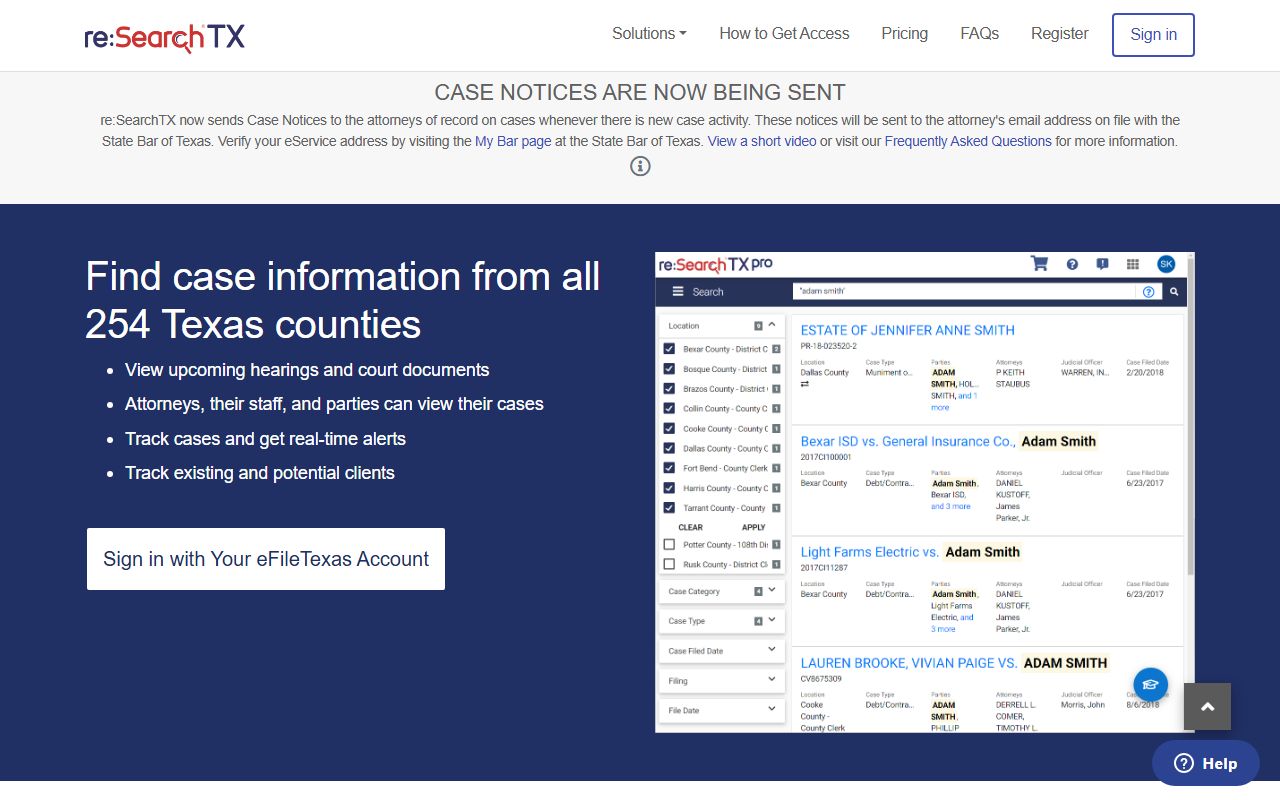
Use re:SearchTX to look up cause numbers and confirm dissolution case details before contacting the Ellis County District Clerk for certified copies.
DSHS Records for Ellis County Dissolutions
Texas DSHS keeps a statewide dissolution index going back to 1968. You can order a DSHS dissolution record for Ellis County cases through dshs.texas.gov or the Texas vital records portal at ovra.txapps.texas.gov. These records confirm names, county, and date of dissolution. They do not include property or custody terms from the decree.
DSHS records are useful when you need to confirm a dissolution happened in Texas but lack the full case details. For legal, financial, or name-change purposes, a certified copy of the full decree from the Ellis County District Clerk is usually required. The DSHS record is a summary document, not a substitute for the court order.
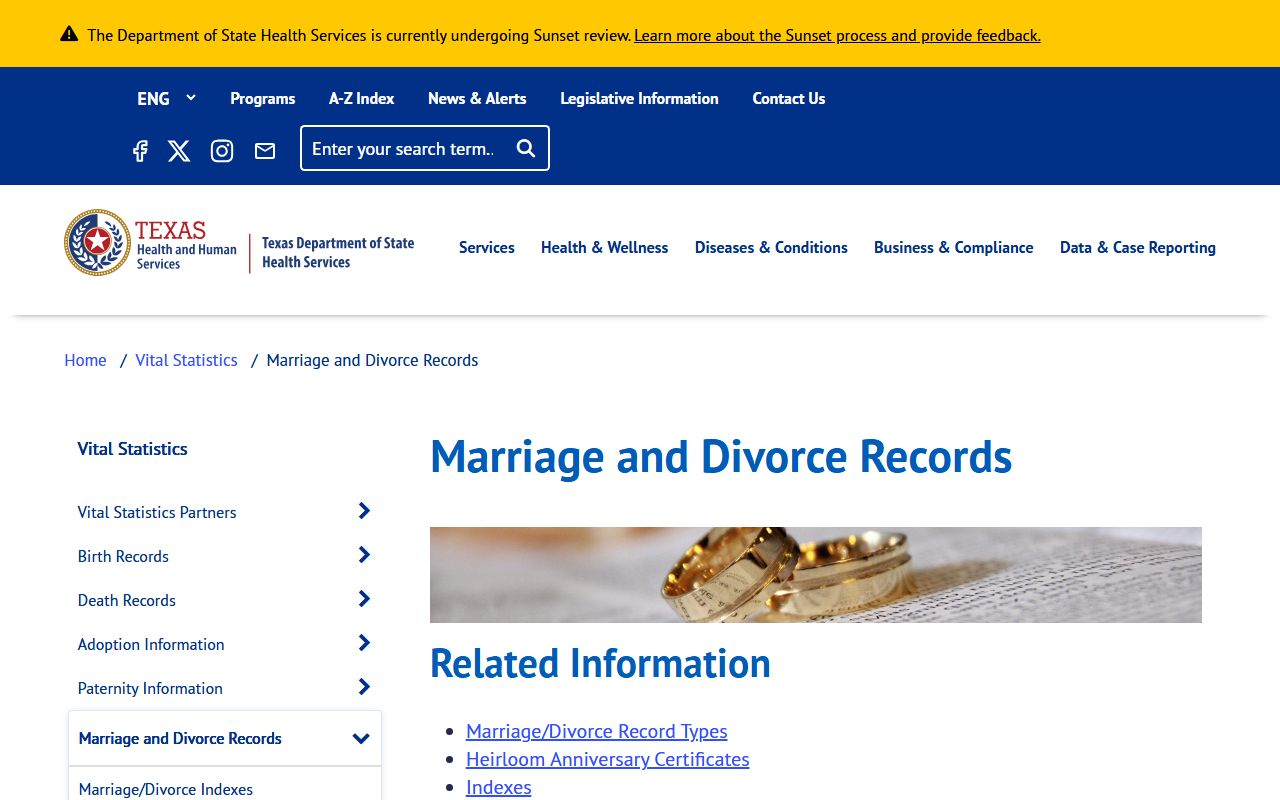
The Texas DSHS vital statistics index is an easy way to confirm a dissolution is on record in Texas when you do not have the full case information.
Filing Dissolution in Ellis County
To file in Ellis County, at least one spouse must have lived in Texas for six months and in Ellis County for 90 days under Texas Family Code § 6.301. File the Original Petition for Dissolution with the District Clerk in Waxahachie. The clerk assigns the case to one of the three district courts.
Texas law requires a 60-day waiting period after the petition is filed before the dissolution can be granted. This applies to all Ellis County cases under Texas Family Code § 6.702. The other spouse must be served with the petition and citation. If both sides agree on all terms, an agreed decree can be filed after the waiting period. Contested cases may need hearings or mediation before the judge signs the final decree.
Ellis County is a community property county like all others in Texas. The court divides marital assets in a just and right manner under Texas Family Code Chapter 7. Separate property includes items owned before the marriage plus gifts and inheritances properly kept apart from marital funds. Everything else acquired during the marriage is generally community property.
County Residency: You must live in Ellis County for at least 90 days before you can file for dissolution here. If you recently moved from another Texas county, confirm the residency period is met before submitting your petition.
Legal Resources for Ellis County
Ellis County residents can access several legal aid and self-help services for dissolution cases. Texas Law Help at texaslawhelp.org has free self-help guides and official forms. Legal Aid of Northwest Texas serves the North Texas region and may be able to help low-income residents with family law matters including dissolution.
The State Bar of Texas referral service is at (800) 252-9690 or texasbar.com. This service connects you with licensed attorneys in Ellis County and the greater Dallas-area region. Texas Court Help at texascourthelp.gov walks self-represented filers through the process step by step. Official court forms for dissolution cases are at txcourts.gov/forms.
The Texas State Law Library at sll.texas.gov has free online legal research tools. If you cannot pay the filing fee, ask the Ellis County District Clerk for a Statement of Inability to Afford Payment of Court Costs form. The court reviews these requests and can waive fees for those who qualify.
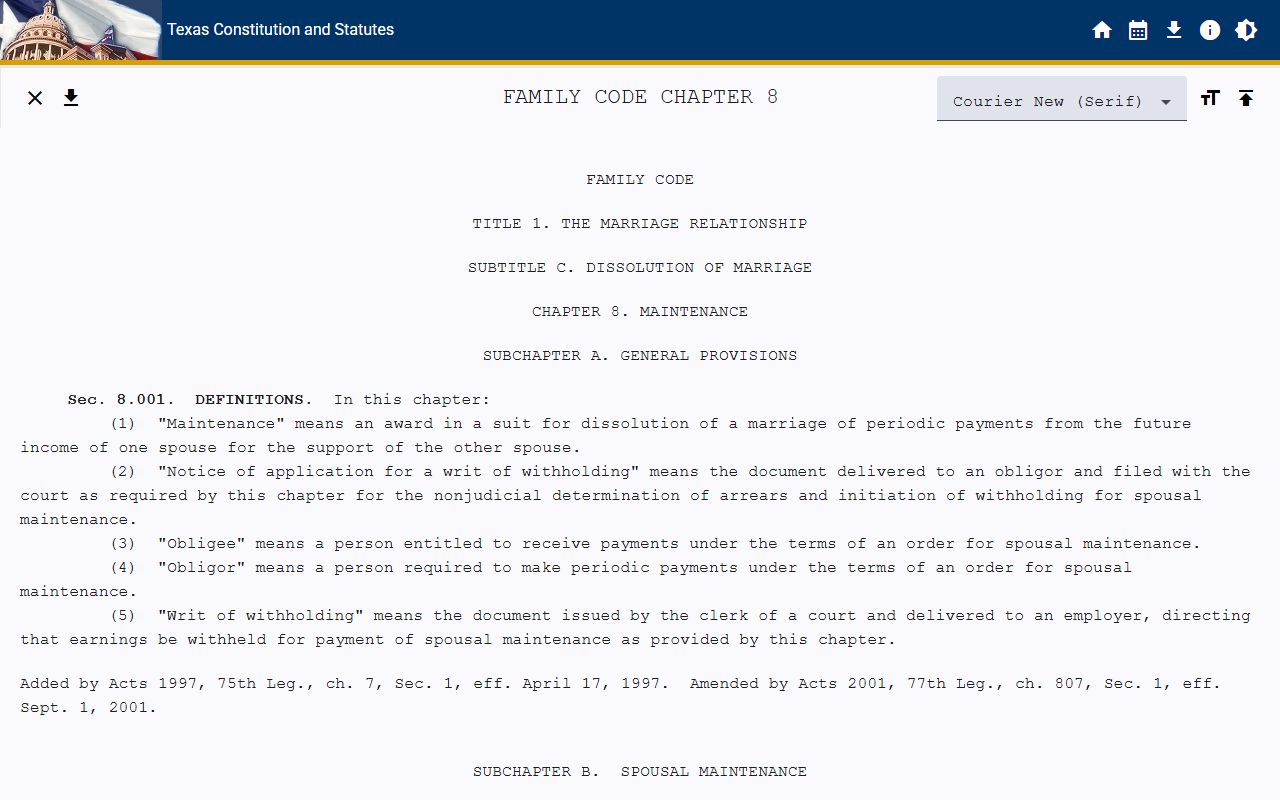
Texas Family Code Chapter 6 governs dissolution of marriage in Ellis County and every other Texas county, covering everything from residency rules to the final decree.
Cities in Ellis County
Ellis County includes Waxahachie and several smaller communities. All dissolution of marriage filings for Ellis County residents are handled at the District Clerk in Waxahachie.
Other communities in Ellis County include Ennis, Midlothian, Red Oak, Waxahachie, and Italy. All residents file dissolution cases through the Ellis County District Court system.
Nearby Counties
Ellis County borders several major counties in North Texas. If you live near a county line, confirm which county you reside in before filing your dissolution case.