
Find Dissolution Of Marriage in Hudspeth County
Hudspeth County dissolution of marriage records are on file at the District Clerk's office in Sierra Blanca. This is a rural West Texas county, and the clerk's office handles all court filings for the area, including divorce and dissolution cases. If you need to look up an old case or get a copy of a Final Decree of Dissolution, the District Clerk is the right contact. Records at this office go back to 1917. You can visit in person or send a mail request with your photo ID and the names of the parties involved. Staff can search by name or cause number.
Hudspeth County Overview
Hudspeth County District Clerk
The District Clerk's office in Sierra Blanca handles all dissolution of marriage filings in Hudspeth County. This is a small office serving a large but sparsely populated area in far West Texas, east of El Paso. All court records, including family law cases like dissolution of marriage, are stored here.
Because the county is rural, there are no online search portals specific to Hudspeth County. Your best options are calling the office directly or using the statewide re:SearchTX system. The clerk's hours are shorter than some larger counties, so plan your visit or call ahead before making a trip. Hudspeth County sits along Interstate 10 in the Trans-Pecos region.
| Office | Hudspeth County District Clerk |
|---|---|
| Address |
201 W. Millican St. Sierra Blanca, TX 79851 |
| Mailing | P.O. Box 58, Sierra Blanca, TX 79851 |
| Phone | (915) 369-2301 |
| Fax | (915) 369-2162 |
| Hours | Monday through Friday, 8:00 AM to 4:00 PM |
Hudspeth County Dissolution Filing Process
To file a dissolution of marriage in Hudspeth County, you must first meet the residency requirement. Under Texas Family Code Section 6.301, at least one spouse must have lived in Texas for six months and in Hudspeth County for at least 90 days before filing. This is a hard rule in Texas. If you haven't met it yet, you'll need to wait or file in another county where you meet the requirement.
Once you file, Texas law imposes a 60-day waiting period under Texas Family Code Section 6.702. The court can't grant the dissolution until that period passes. There are limited exceptions for family violence situations. After the waiting period ends and both parties have resolved all issues, the judge can sign the Final Decree of Dissolution.
Hudspeth County is one of the largest counties by land area in Texas but one of the smallest by population. The court system there handles a low volume of cases. Staff can usually give you personal attention when you visit or call. Standard Texas fees apply for filing and for copies of court records.
Searching Hudspeth County Dissolution Records Online
Hudspeth County does not have its own online records portal. To search dissolution cases from this county, use the re:SearchTX platform run by the Texas Office of Court Administration. This statewide system includes docket information from courts across Texas and is free to use.
The image below shows the re:SearchTX case search portal, which includes Hudspeth County family court filings.
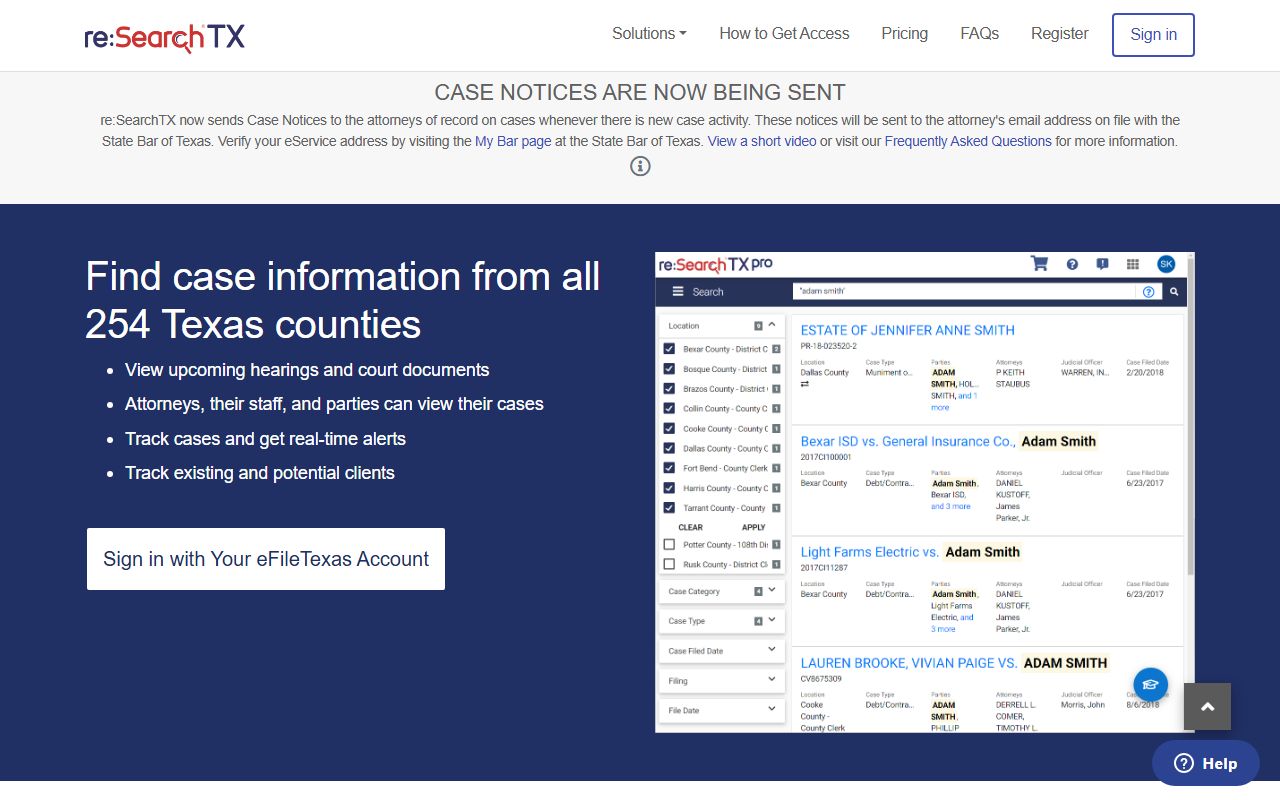
You can search by party name or cause number through re:SearchTX to find Hudspeth County dissolution cases.
For e-filing in Hudspeth County, attorneys use eFile Texas. If you are filing on your own, call the clerk's office at (915) 369-2301 to confirm what filing methods are available for self-represented parties in this county.
Vital Statistics and Dissolution Records
The Texas Department of State Health Services maintains a statewide index of dissolution records through its Vital Statistics Unit. This is useful if you know a dissolution happened in Texas but aren't sure which county handled it. The DSHS index can point you in the right direction, and then you contact the relevant District Clerk for copies.
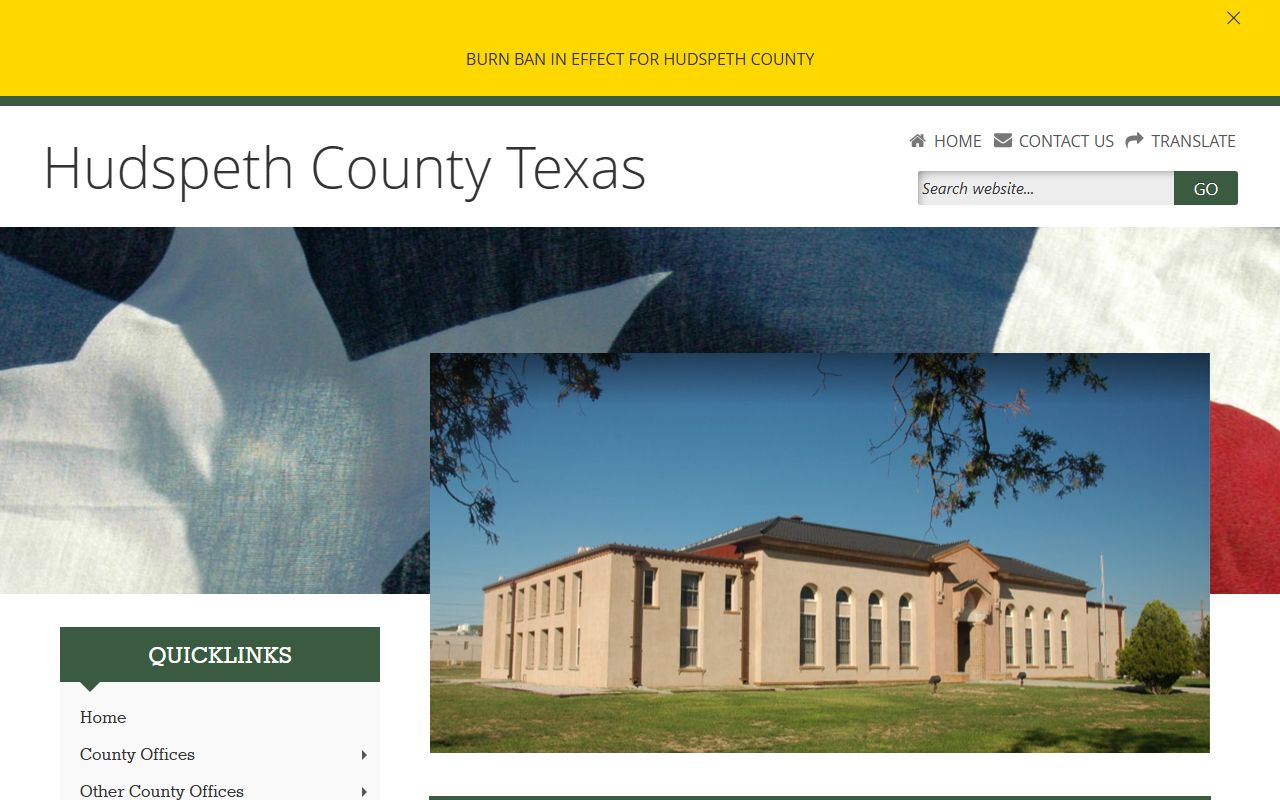
The Hudspeth County official site and the DSHS vital statistics portal are both good starting points for researching dissolution records in this area.
You can also order certified vital records online through the Texas vital records portal. For certified copies of the court decree itself, you must go through the Hudspeth County District Clerk directly.
Legal Framework for Dissolution in Hudspeth County
Dissolution of marriage cases in Hudspeth County follow the same Texas law as every other county. Texas Family Code Chapter 6 sets the grounds, residency rules, and process. The most common ground is insupportability, which is no-fault. You don't have to prove wrongdoing. The marriage just has to be broken down to the point there's no reasonable hope of fixing it.
The Texas State Law Library offers free online access to the Texas Family Code and related statutes. This is a good resource if you want to understand your rights before filing. Court forms for dissolution cases statewide are available at txcourts.gov/forms. The Texas Courts FAQ answers common questions about what to expect during the process.
Legal Help for Hudspeth County Residents
Hudspeth County is in the service area for Texas RioGrande Legal Aid, which provides free civil legal services to low-income residents of West and South Texas. Visit trla.org or call (888) 988-9996 to ask about eligibility. Family law cases, including dissolution of marriage, are part of their work.
The TexasLawHelp website has free self-help guides for dissolution cases, including forms and step-by-step instructions. The Texas Court Help website is another free resource with plain-language guides. For a referral to a private attorney, call the State Bar of Texas at (800) 252-9690 or search at texasbar.com.
Note: El Paso is the nearest large city to Hudspeth County. Legal aid offices and bar association resources in the El Paso area may also serve Hudspeth County residents.
Cities in Hudspeth County
Hudspeth County is a rural West Texas county. Its main communities are Sierra Blanca (county seat) and Dell City. All dissolution of marriage filings for the county go through the District Clerk in Sierra Blanca.
Nearby Counties
These counties are near Hudspeth County in West Texas. Check where you have lived for 90 days to confirm where you should file.