
Find Dissolution of Marriage Records in Lynn County
Lynn County dissolution of marriage records are maintained by the District Clerk in Tahoka. If you need to search for a divorce case or request copies of a final decree, the District Clerk's office is the place to go. Records date back to 1903. You can contact the office by phone or mail, or visit in person during regular hours. The clerk can look up cases by party name or cause number and tell you what documents are available.
Lynn County Overview
Lynn County District Clerk
The District Clerk in Tahoka handles all court filings in Lynn County, including dissolution of marriage cases. The office stores case files and processes requests for copies of court documents. Staff can search records by name or cause number and tell you what is in each file. The courthouse is on South Washington Street in Tahoka.
Lynn County is a rural agricultural county on the Texas South Plains, just south of Lubbock County. It is a small county with a modest volume of divorce cases each year. Cases here tend to be simpler, but the same state laws apply as in any Texas county. The District Clerk covers all civil, family, and criminal district court matters. There is one district court serving the county.
The county website at co.lynn.tx.us has contact information for county offices. For dissolution of marriage records, call or write the District Clerk directly.
| Office | Lynn County District Clerk |
|---|---|
| Address | 110 S. Washington St. Tahoka, TX 79373 |
| Mailing Address | P.O. Box 937, Tahoka, TX 79373 |
| Phone | (806) 561-4280 |
| Fax | (806) 561-4282 |
| Hours | Monday through Friday, 8:00 AM to 4:30 PM |
The Lynn County official website lists contact information for county departments, including the District Clerk responsible for dissolution of marriage records.
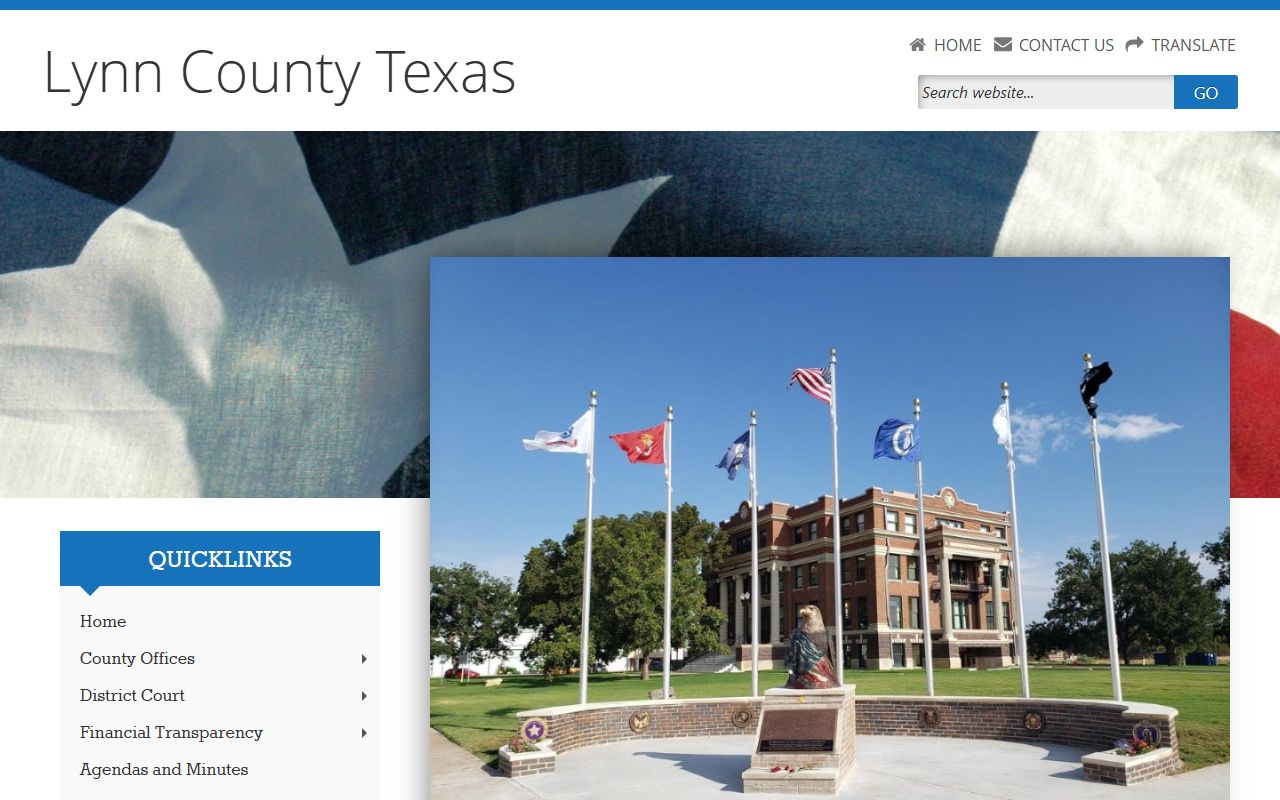
Lynn County's courthouse in Tahoka serves as the seat of government and houses the District Clerk, where all civil and family court records are filed and stored.
How to Search Lynn County Divorce Records
Lynn County does not have its own public online case search tool. To look up a dissolution of marriage case, you need to contact the District Clerk directly. Call the office at (806) 561-4280 or send a written request by mail. You can also check the statewide re:SearchTX portal, which may include some Lynn County district court records. Search by party name or cause number.
When you request records, be ready to provide the full names of the parties, the approximate year of the divorce, and a cause number if you have it. The clerk will let you know what they found and what it will cost to get copies. For certified copies, you can pick them up in person or ask for them by mail. Mail requests take longer since the clerk must process payment before sending anything.
To get a certified copy of the Final Decree of Divorce, you will pay a per-page fee plus a certification charge. The clerk can tell you the exact cost when you request. Plain copies cost less than certified ones. Most people who need a certified copy want it to prove their marital status or to change a name.
Note: For very old records going back near 1903, the files may be stored in physical archives and take extra time to pull. Ask the clerk about retrieval time when you contact them.
Filing for Divorce in Lynn County
The process for filing a dissolution of marriage in Lynn County follows Texas state law. Under Texas Family Code Chapter 6, at least one spouse must have lived in Texas for six months and in Lynn County for 90 days before filing. You file the Original Petition for Divorce with the District Clerk and pay the filing fee at that time. The clerk stamps the petition with the filing date, which starts the case.
The other spouse must receive the divorce papers by legal service. They can also sign a Waiver of Service if they agree to skip formal service. Texas allows both no-fault and fault-based grounds for divorce. The most common is insupportability under Section 6.001, which simply means the marriage no longer works and cannot be fixed. Fault grounds include things like cruelty, adultery, and abandonment.
After filing, a 60-day wait is required by law before the court can grant the divorce. If both parties agree on all terms, an Agreed Final Decree of Divorce can be submitted to the judge after that waiting period. Contested cases may take longer if issues like property, debt, or children need to be worked out. Child custody matters are handled under Texas Family Code Chapter 153.
Spousal maintenance, if requested, is addressed under Texas Family Code Chapter 8. Not every case involves spousal maintenance, but when it is at issue, the court looks at factors like the length of the marriage and each spouse's ability to earn income.
Documents in a Lynn County Dissolution Case File
A dissolution of marriage case file in Lynn County contains all the papers filed from the start of the case to its end. The Original Petition for Divorce opens the file. Any temporary orders issued during the case, waiver of service documents, and financial papers get added as the case moves along. The Final Decree of Divorce closes it out.
The final decree is the key document. It spells out how the marriage is ended, how property and debt are divided, whether any spousal support was ordered, and in cases with children, the conservatorship and child support terms. The judge's signature makes it official. You need a certified copy of this document for name changes, mortgage refinancing, and other legal purposes.
Most divorce records in Lynn County are public. Anyone can request them. Some financial exhibits may be sealed. Documents relating to minor children may have limited public access depending on what the court ordered. The clerk can tell you what parts of a file are open and what, if anything, has been sealed.
Lynn County Filing Fees and Costs
Filing fees in Lynn County are set by the court and follow state guidelines. For a basic divorce without children, fees are generally in the $200 to $300 range. This covers the filing fee and required state surcharges. If minor children are involved, the cost is typically a bit higher. Confirm the exact amount with the clerk before you file, as fees can change.
Other costs include process server fees if the other spouse must be formally served, and copy fees when you need documents from the file. Certified copies cost more than plain copies. Most requests involve paying per page plus a certification fee. You can ask the clerk for the current rate when you make your request.
People who cannot afford the fees may qualify for a fee waiver. File a Statement of Inability to Afford Payment of Court Costs with the court. Forms are available at the courthouse and on the Texas Courts website at txcourts.gov. The judge reviews the form and decides whether to grant the waiver.
Legal Help for Lynn County Residents
There are no local legal aid offices in Lynn County itself, but residents can look to nearby Lubbock for legal help. Legal Aid of Northwest Texas has an office in Lubbock and serves the surrounding region. They handle family law cases including divorce for people who meet income requirements. You can search for their contact information online or through texaslawhelp.org.
The State Bar of Texas runs a lawyer referral service that can connect you with a family law attorney. Call (800) 252-9690 or search at texasbar.com. Many family law attorneys in Lubbock handle cases in Lynn County and other nearby rural counties.
For self-help, texaslawhelp.org has free guides on how to file for divorce in Texas and what to expect at each step. The Texas Court Help site at texascourthelp.gov also has step-by-step tools for handling your own case. The Texas State Law Library at sll.texas.gov provides access to statutes, court rules, and legal research tools at no charge.
Nearby Counties
These counties are near Lynn County. You must file for dissolution of marriage in the county where you or your spouse has lived for at least 90 days.